
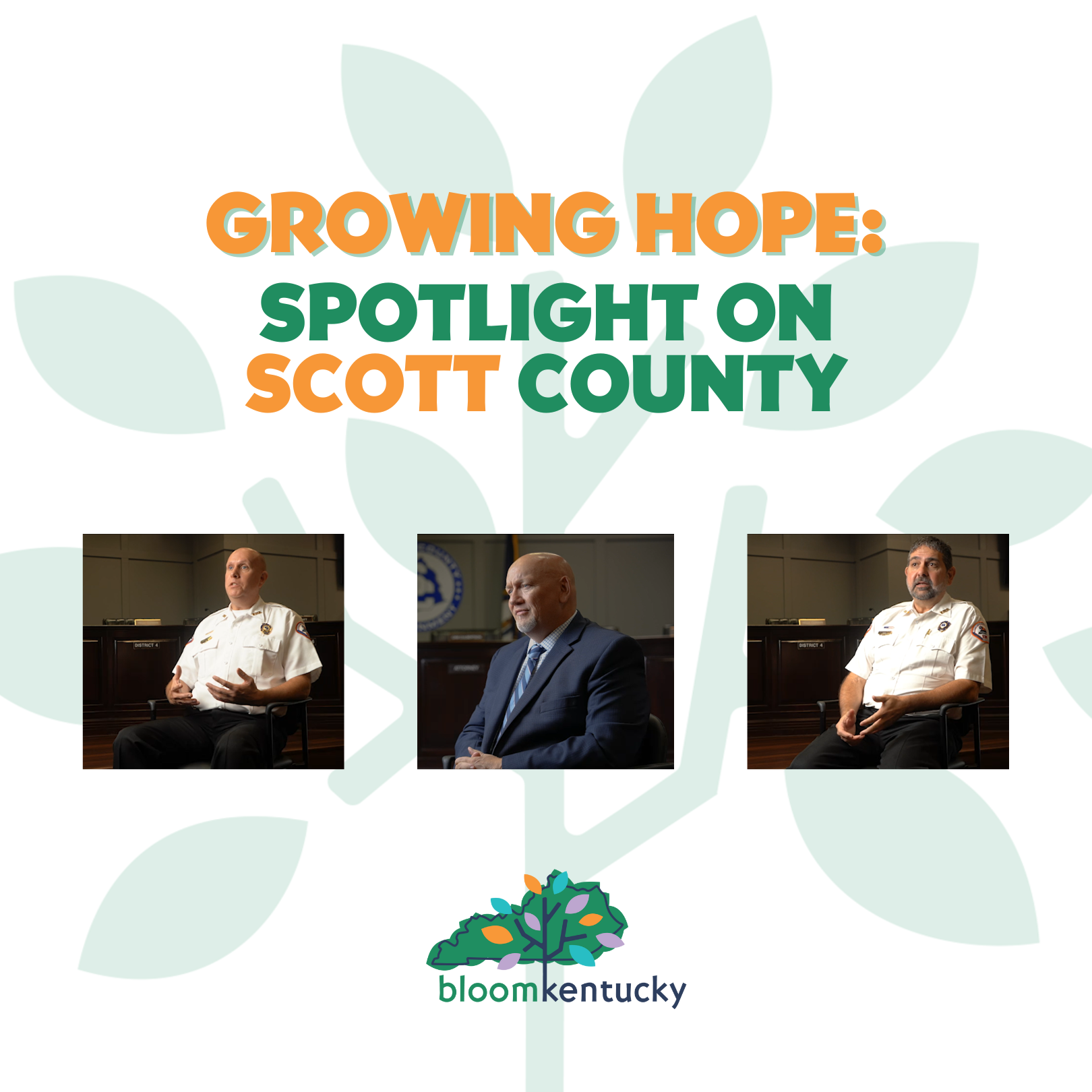
 In this edition of Bloom Kentucky’s Growing Hope series, we’re highlighting the incredible opioid abatement efforts in Scott County. Recently named a “Recovery Ready Community,” Scott County has shown a commitment to providing resources for treatment, recovery support, and workforce reintegration for residents struggling with substance use disorder.
Scott County has used their local opioid dollars to support some key initiatives. Those initiatives include:
- Community Paramedicine Program: This initiative aims to partner with local agencies to support individuals with addiction issues and other challenges. By providing resources and guiding them through recovery channels, the program seeks to make a substantial impact by meeting individuals where they are and providing them with resources and support. Community paramedics will also assist the homeless population in finding necessary resources.
- Social Workers in Schools: Scott County is funding two social workers to be embedded in local high schools. These professionals focus on supporting young people and their families affected by addiction, providing crucial support within the educational environment.
Paramedicine Program Insights
Brandon Remley, Division Chief of the Community Paramedicine Program at Georgetown-Scott County EMS, emphasizes the importance of compassion and understanding in dealing with addiction. He shared, “You have to be compassionate with people…You have to understand where they come from.”
Remley described how the program is designed to work with individuals to uncover root causes of their issues, connect them with primary care, and manage their mental health needs. By reducing unnecessary use of emergency services and providing specialized care, the program aims to create a more efficient and supportive healthcare. That healthcare, Remly described, is supported by dedicated partners and even faith-based communities such as the Amen House and the Gathering Place.
Community Collaboration
The success of these initiatives relies heavily on community collaboration according to Remly. The local recovery-ready coalition has been actively engaging with the public, identifying gaps and strengths, and developing strategies for education and engagement. The coalition’s efforts include continuing their work with the recovery-ready certification and ensuring a structured and ongoing commitment to addressing addiction.
Corey Council, the Recovery Support Coordinator with the Georgetown Police Department, echoed Remly’s sentiment of the importance of community collaboration when discussing how to become “Recovery Ready”. Council mentioned that the certification process is quite extensive and that everyone in the community has a role to play in this work.
Looking Ahead
Scott County’s proactive approach and dedication to collaboration and efficient use of resources set a strong example for other communities facing similar challenges. By addressing the root causes of addiction and providing comprehensive support, Scott County is making significant strides in creating a healthier, more supportive environment for its residents. The ongoing efforts and dedication of local leaders, healthcare providers, and community members are a testament to the power of collaborative action in overcoming the opioid crisis.


[…] County is using opioid settlement funds for the Community Paramedicine Program, which partners with local agencies to connect individuals […]