
Over the course of just 6 weeks, Kentucky Youth Advocates and Bloom Kentucky covered over 2,000 miles around the state hosting 19 regional listening sessions. We heard from over 350 Kentuckians including parents, teachers, community leaders, service providers, elected officials, youth, and more. Hosting these convenings and hearing from communities all over the state would not have been possible without our partner organizations who acted as co-hosts for each event.
Throughout the tour we asked about the biggest challenges facing children and families and found commonalities in all nine Department for Community Based Services regions around issues including housing, poverty, mental health, kinship/foster care, and substance use.
Although we heard a number of themes that came up in each region, we also heard unique ideas, challenges, and solutions at each stop.
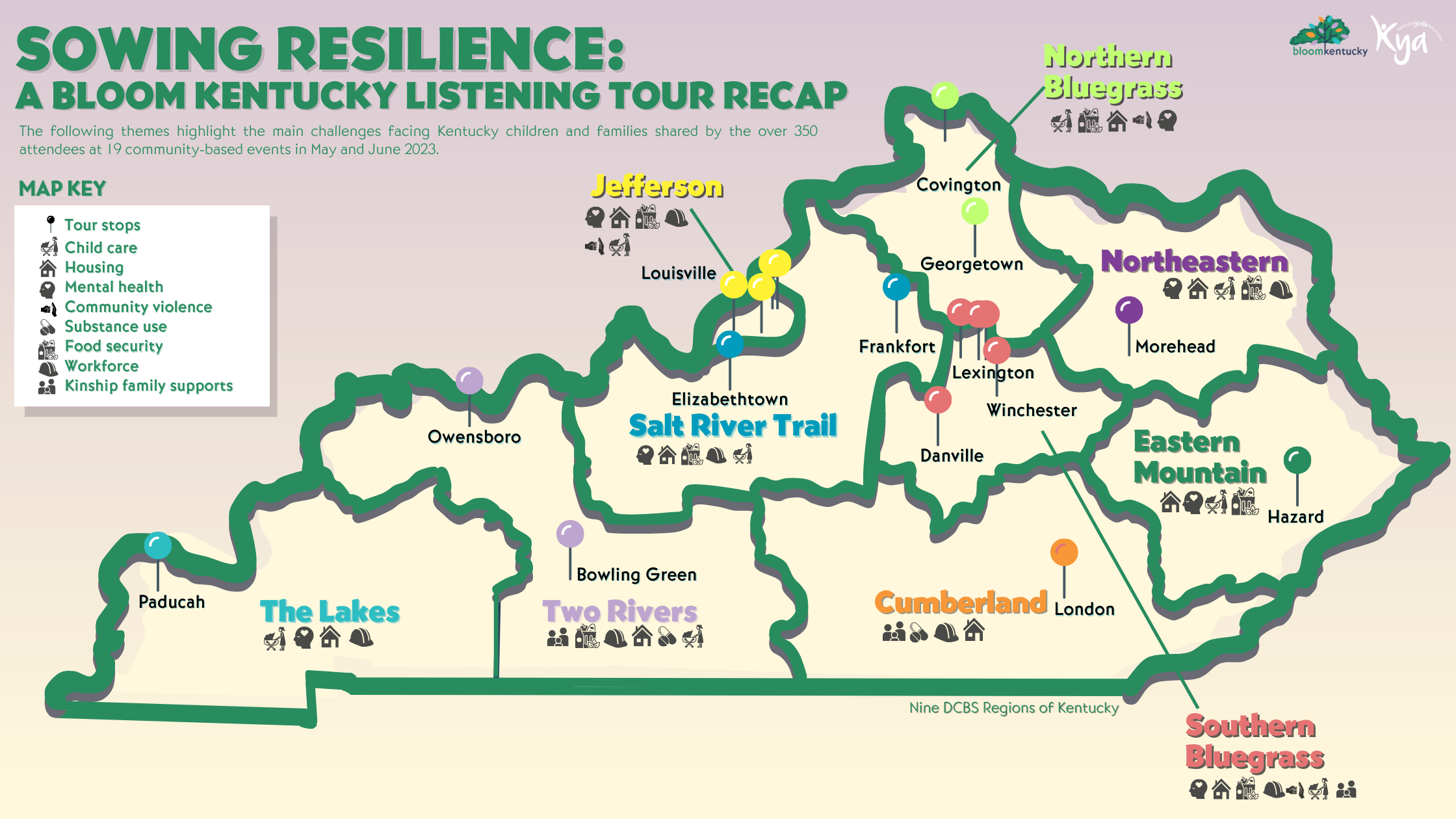
Cumberland Region
Co-hosted with Volunteers of America-Mid States in London
Our event in London included conversations highlighting the extreme poverty that continues to plague the region, resulting in a lack of basic needs for many families, including access to reliable water systems and liveable wages. The impact of the 2022 historic flooding in the region has resulted in a housing crisis for many Eastern Kentucky residents and fragmented infrastructure. Attendees highlighted the stigma associated with asking for help and finding the right resources when you need them – especially for unique groups, such as grandparents raising grandchildren, a common occurrence in this region.
Eastern Mountain Region
Co-hosted with the Foundation for Appalachian Kentucky in Hazard
As another region heavily impacted by flooding in 2022, housing and rebuilding communities was a primary concern in this region. Accessing needed support for mental health proves difficult for many families, with attendees citing barriers such as transportation and substance use. Workforce issues including low wages and availability of jobs are impacting families and the limited availability of child care further compounds these concerns. Systemic poverty is another concern, creating barriers to food security and transportation to needed resources.
Jefferson Region
Multiple events co-hosted with Peace Hospital in South Louisville, co-hosted with Play Cousins Collective in West Louisville, event in East Louisville, and event with youth and young adults
Among the top concerns in Jefferson County we heard from attendees included inequities in healthcare, child welfare, and education, highlighting specific groups such as people of color, people with disabilities, immigrants and refugees, and the LGBTQ+ population. An increase in community violence and gun violence in this region has heavily impacted children and families, including the increased need for mental health services. Finding affordable, safe housing also continues to be a concern in this region.
A session specifically for youth and young adults highlighted the experience of racism and the impact it has on young people. Feeling prepared for adulthood, workforce readiness, and workplace discrimination, including age discrimination, were also concerns among this group.
Northeastern Region
Co-hosted with Morehead State University in Morehead
Attendees of the Morehead event discussed the impact of trauma, including high rates of foster care and substance use in their communities. They also cited workforce challenges that have impacted class sizes in their schools and availability of child care. Difficulty accessing needed resources was highlighted as families struggle to find Medicaid providers, access the transportation they need, or simply know about the resources available to them.
Northern Bluegrass Region
Two events co-hosted with Learning Grove, Brighton Center, and Cincinnati Children’s Hospital in Covington and co-hosted with Scott County Agency for Substance Abuse Policy and Scott Countians Against Drugs in Georgetown
Among the most pressing issues in this region were mental health and substance use, including a need for qualified providers that are accessible to children in their communities and schools. Also highlighted by attendees was the rising cost of basic needs, resulting in families experiencing food insecurity, housing instability, and a benefits cliff when wages increase. Limited availability of child care for families was lifted as a concern, citing a need for more resources for children ages 0-3 and their families. In addition to meeting basic needs for families, the increase in gun violence has impacted communities in this region, further amplifying the need for mental health care.
Salt River Trail Region
Two events co-hosted with the Kinship Families Coalition of Kentucky in Elizabethtown and co-hosted with the Wanda Joyce Robinson Foundation in Frankfort
Families identified struggling to meet basic needs, such as finding safe, affordable housing and maintaining food security. Increased needs for mental health care are not being met in this region, with concerns about the reimbursement rates for providers and inclusivity of care for marginalized populations. Access to child care and other support for children 0-3 was identified as a challenge in this region, with low wages for providers as a contributing factor.
Southern Bluegrass Region
Multiple events co-hosted with the Danville Branch of Women’s Network in Danville, co-hosted with the Greater Clark Foundation in Winchester, co-hosted with the Community Action Council in Lexington, co-hosted with Face It Bluegrass, and co-hosted with the Blue Grass Community Foundation in Lexington
The need for mental health services for children and families was among the top concerns in this region, with limited providers and speciality services impacting accessibility. Rising costs of basic needs including food and housing were highlighted and workforce challenges are directly impacting the availability and quality of child care and education resources for families. Child safety was a concern of attendees, lifting up the increase they have seen in community violence and highlighting the need for cybersafety for children. Additionally, this region identified a growing number of children in the child welfare system and a need for more resources for kinship and foster families to better support these children.
The Lakes Region
Co-hosted with Murray State University in Paducah
This listening session focused on the challenges with finding reliable, high-quality child care and the impact this has on the workforce and child welfare for families in their region. As another region impacted by a natural disaster, attendees highlighted the continued housing crisis resulting from recent tornadoes in the region – specific concerns including rising housing costs of rebuilt structures and accessibility for low income families. Another concern in this region was the increasing need for mental health care coupled with limited access to affordable, qualified providers for children and their families.
Two Rivers Region
Two events co-hosted with CASA of Ohio Valley in Owensboro and co-hosted with Family Enrichment Center in Bowling Green
A frequent concern in this region was families lacking basic needs such as food, transportation, and housing – a theme across the region, with some parts seeing impacts of recent tornadoes. Resources that are available prove difficult to access for many families with attendees citing the complex application process and limited language inclusivity for immigrant and refugee populations in the region. Workforce issues in this region are also leading to difficulties finding child care and qualified mental health professionals, specifically for young people in need of substance use treatment and vaping cessation. Support is lacking for children involved in the child welfare system, including resources for kinship providers and child care for foster children.
Recommendations:
Among the challenges and concerns identified in each region, we heard solutions and ideas for improvement that permeated throughout the Commonwealth.
- Increasing reimbursement rates for key professionals, such as Medicaid providers and child care workers was lifted as a solution to improve access and quality of services.
- Prioritizing prevention in communities by increasing access to safe, positive activities for youth was highlighted by attendees.
- Reducing barriers to resources and ensuring families have meaningful access, including adding transportation or co-locating services where families frequent, simplifying application processes, and improving inclusivity for marginalized groups.
- Prioritizing broader state budget investments in affordable housing, mental health, and child care.
Every region of the Commonwealth brings a unique perspective and helps shape our understanding of the challenges and barriers facing Kentucky kids and families, as well as the solutions and policies we prioritize. THANK YOU to everyone who attended a listening session and contributed your experiences, perspectives, and ideas.
Want to stay involved in advocating for Kentucky kids and families? Here are a few ideas:
- Sign up for email updates from Kentucky Youth Advocates
- Become a Blueprint for Kentucky’s Children partner
- Check out how your region measures up in Adverse Childhood Experiences and in other areas of child well-being



Leave A Comment