
by Tara Grieshop-Goodwin
 The air conditioning unit at our house recently went out – at the peak of some of our hottest days of the summer. We had an older unit that our HVAC service person had been able to keep running with fixes and repairs for many years (even decades) past when most units last. But eventually the damage was too great for repair and we had a big expense to cover. We debated about which unit to get to replace our old one. While talking with the HVAC company, they asked us an important question: “Is this your forever home?” When we responded that it was, they gave us the dollar figures that showed that the cost of investing up front in a unit with higher efficiency would be recouped in a matter of years with the savings we could expect. We figured out the finances to make that investment in our “forever home.”
Communities across Kentucky are currently making decisions of how they’ll use funds from the opioid settlement. Each county in Kentucky has important decisions to make about the balance of putting those settlement dollars into fixing problems created by the opioid epidemic and making an investment in the community so we don’t face similar epidemics in the future. In this case, it’s good that the answer isn’t a simple “this or that.” We can do both – address the harm caused to so many families by the opioid epidemic and prepare our communities to be resilient.
A similar question to that asked by our HVAC company can interestingly apply to the much bigger question of how we respond to the opioid epidemic. Is Kentucky our “forever home”? If yes, what are the investments we need to make now to have stronger communities in the future? The Opioid Data Dashboard on Children and Families was developed to help county officials identify where investments are most needed and could have the greatest impact. The data has been compiled, based on input from experts across Kentucky, about the many factors that can decrease substance use, opioid use, and the negative harms that result.
In addition to being able to access the Opioid Data Dashboard online, Kentucky Youth Advocates (KYA) is offering support to county elected officials to analyze and interpret that data. With that information, county officials can map out the plan for investing the opioid settlement dollars over the upcoming 15 years to achieve meaningful impact and prevent a future epidemic. 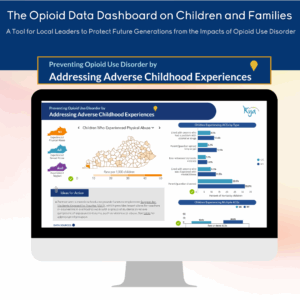
KYA will tailor technical assistance to the interests of each county, through a grant from the Opioid Abatement Commission. It could mean simply providing a summary of key data takeaways with potential solutions to consider. It could also mean KYA presenting data takeaways and answering questions at a local meeting. For counties who are working through the decision process, KYA can facilitate a conversation among community members who identify and prioritize the data points most important to them for taking action. The bottom line is, KYA will assist counties as they make decisions for their future. You can request a presentation, data briefing, community facilitated conversation, or other technical assistance here.
Together, we can invest in a strong and healthy “Forever Kentucky Home.”
This project to provide relevant data and technical assistance to county leaders to inform decisions about opioid abatement settlement funds was paid for with funds from the Kentucky Opioid Abatement Advisory Commission by and through the Office of the Attorney General. The opinions, findings, conclusions, and recommendations expressed in this publication/program/exhibition are those of the author(s) and do not necessarily reflect the views of the Kentucky Opioid Abatement Advisory Commission or the Office of the Attorney General.
Photo courtesy of Betsy Logan via Dreamstime



Leave A Comment