
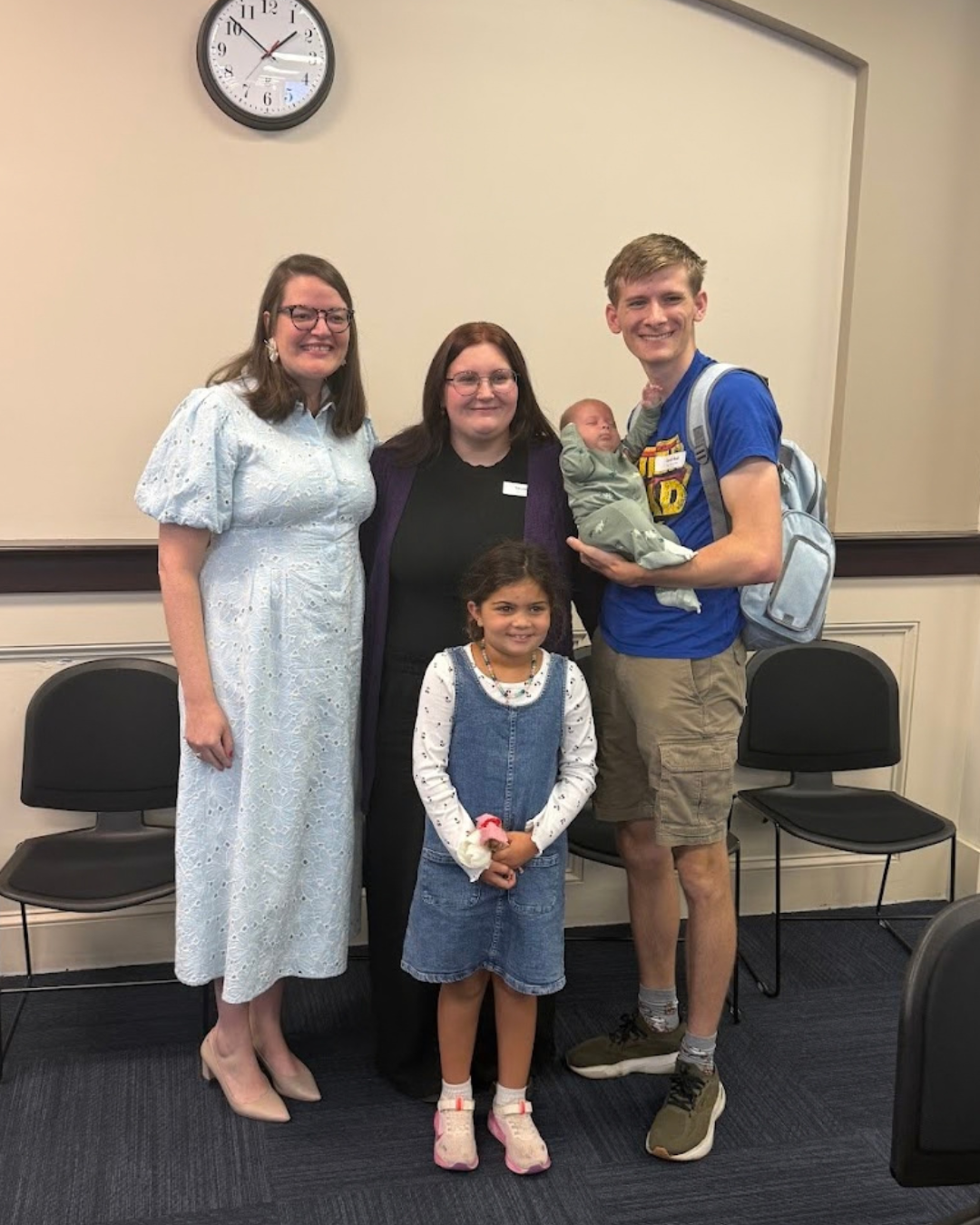
Last week, Tatum Abel, a foster and kinship lived experience advocate and former True Up Peer Network member, spoke before the Kentucky General Assembly’s Interim Joint Committee on Families and Children about the importance of expanding access to respite care for kinship caregivers. We are grateful to Committee Co-Chair Rep. Samara Heavrin for inviting Tatum to share her lived experience and ideas for strengthening support for kinship families.
When children cannot safely remain with their parents, placement with relatives or close family friends can help them maintain important connections to family, siblings, school, culture, and community while supporting greater stability. Kinship caregivers can enter several different placement arrangements, and decisions made early in the process can affect the financial assistance, services, and other supports available to the family.
The Gap in Respite Support
One example of those differences is access to respite care, which is short-term, temporary care that gives caregivers a break while ensuring the child continues to be safely cared for. Respite can help reduce caregiver stress and burnout while supporting the stability of the child’s placement.
In Kentucky, traditional foster parents and certified relative or fictive kin foster parents generally have access to one reimbursed respite day per child each month, with additional days available for some higher-needs placements. However, non-foster relative and fictive kin caregivers are not eligible for state-funded respite, and families receiving Subsidized Permanent Custody have limited access depending on whether the child was previously approved for a higher-needs foster care rate.
Why Respite Matters
During her testimony, Tatum shared how the lack of support for kinship caregivers affected her own family. She and her older brother were raised by her grandparents starting when she was three days old. At that time, her grandparents were not kinship foster parents and were not offered the same benefits and supports available to foster families.
Tatum described watching her grandparents struggle both financially and emotionally while raising two children without access to supports like respite care. They could not afford a babysitter and did not have family or friends they could rely on for an occasional break. Those challenges became even greater after her grandmother passed away when Tatum was 16, leaving her and her grandfather to navigate grief and stress without additional state support.
“If I had been given some sort of respite care, I’m sure getting a break would have allowed me to see things from my grandfather’s perspective and vice versa, him to see through my eyes. And I think it would have allowed us to stay together as a family, but unfortunately, we weren’t afforded that.”
After later entering foster care, Tatum experienced respite care firsthand. Her foster family was able to use respite when needed, giving both Tatum and her caregivers time to step away and manage stress. She shared that those breaks helped them maintain a healthy relationship and that she remains close with her former foster mother today.

Call to Action
Tatum concluded her testimony by calling on Kentucky to:
- Expand respite access for non-foster kinship caregivers and families receiving Subsidized Permanent Custody who do not currently have access
- Provide dedicated state funding to support this expansion
- Ensure Kinship Navigators inform families about available respite supports and help connect them to services
Expanding access to respite care would provide more kinship caregivers with the opportunity to take needed breaks while helping support stable placements and strong relationships for the children in their care.
To learn more:
- Watch Tatum’s full testimony from the September 16th Interim Joint Committee on Families and Children hearing in Frankfort (beginning at 24:00).
- Read our blog on building connections during Kinship Care Month in Kentucky.
- Learn more about and find resources from the Kinship Families Coalition of Kentucky




Leave A Comment