
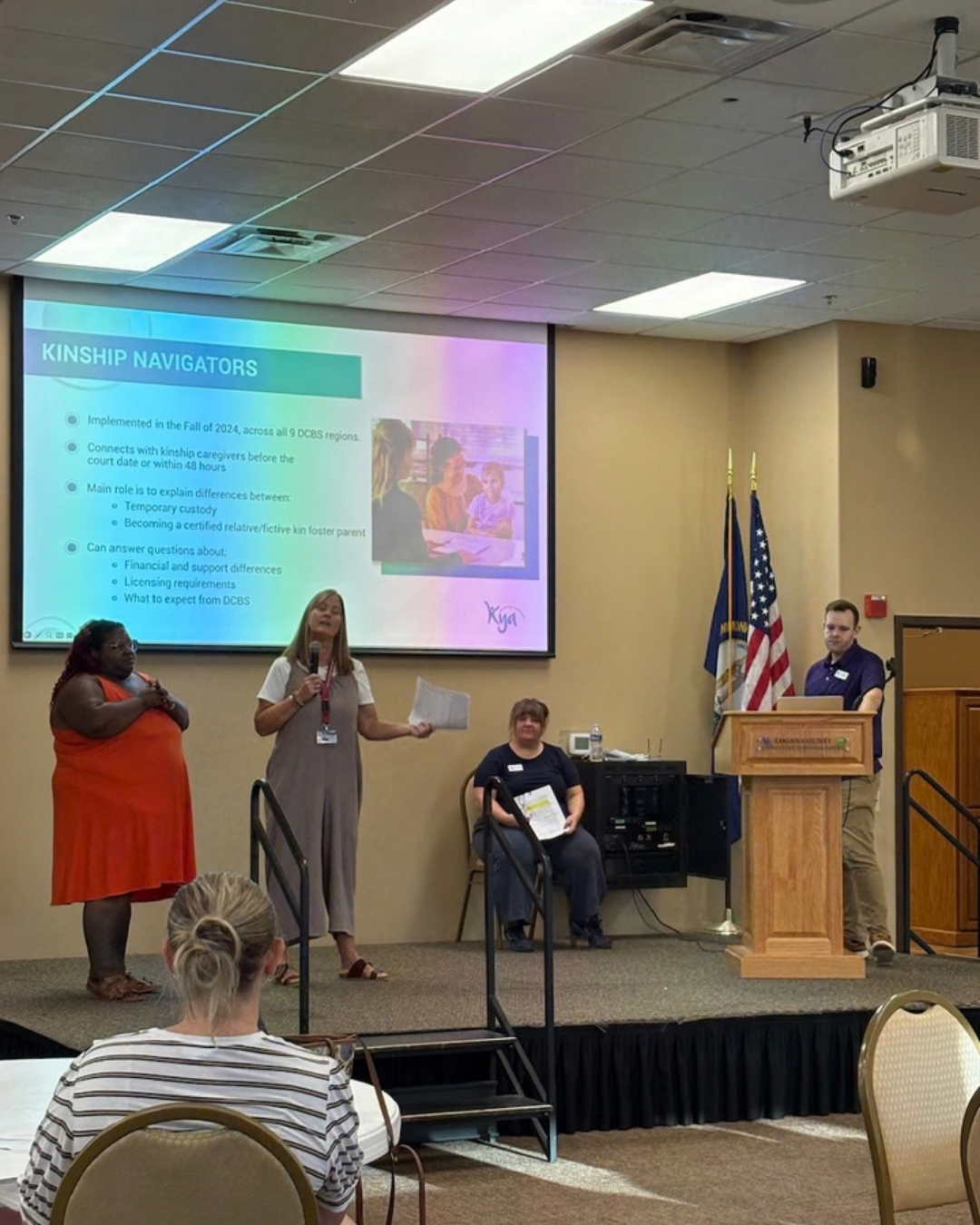
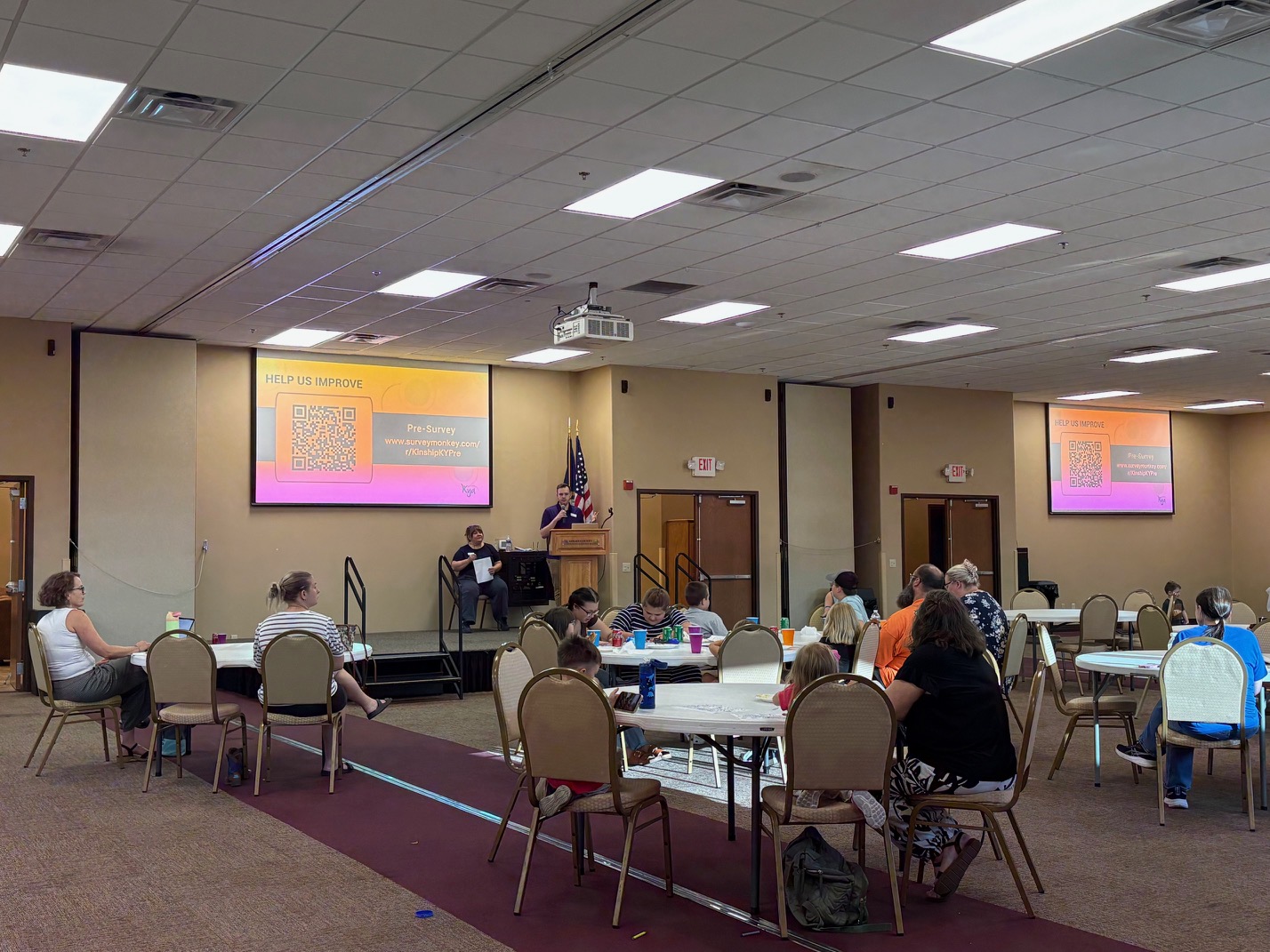
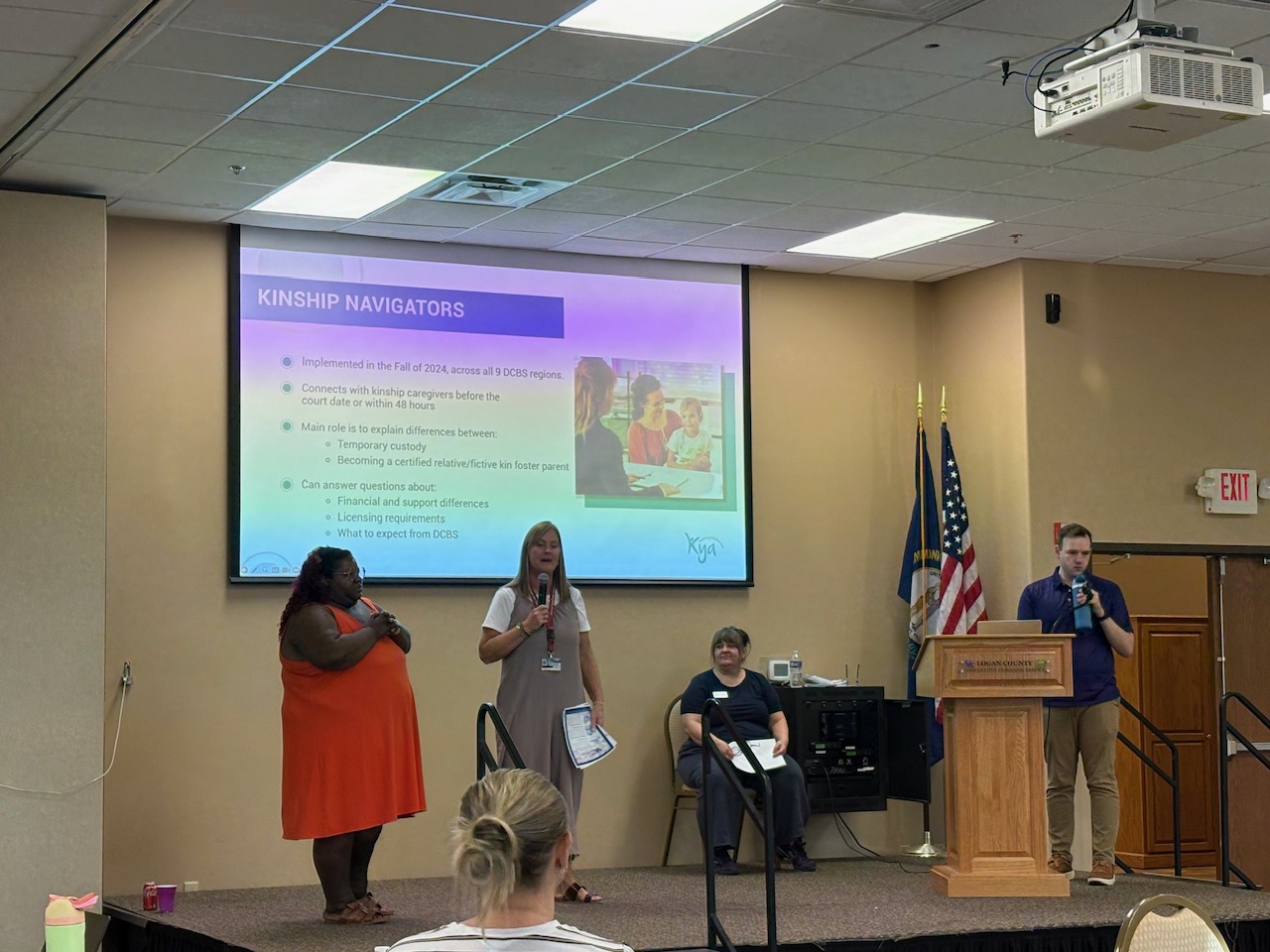
This year, the Kinship Families Coalition of Kentucky in partnership with Kentucky Youth Advocates, through the support of Casey Family Programs, hosted a series of free Kinship Connections events to increase awareness and support for kinship caregivers, grandparents, relatives, or close family friends raising children. The event in Logan County on September 19th was one in a series: the first event took place on May 27th in Laurel County. KYA and the Kinship Families Coalition plan to host three more events in 2027 (follow our Facebook page for locations and registration updates).
National Kinship Care Month in September is a time to lift up, listen to, and celebrate kinship families. This month the Kinship Families Coalition of Kentucky and Kentucky Youth Advocates, along with community partners in Logan County, convened a Kinship Connections event designed to connect kinship caregivers – grandparents, relatives, and close family friends raising children – with access to tools and resources to help understand and navigate the child welfare and legal systems, increase access to available services, and build connections with other families and community organizations.
I hadn’t realized how common kinship care is until this year as I began joining these events and making connections. Many of us have a connection to kinship care in our families. For some of us it was a time during our own childhood when a grandparent, older sibling, other relative, or family friend stepped up to take care of us. These have historically often been informal arrangements, without the involvement of the child welfare system.
Building a Community of Care
Like many kinship caregivers, the experience was initially isolating for me, when in 2016 I suddenly gained custody of a 5-month-old relative. I did not have a strong support system in place and the process of getting our needs met was difficult. Since then, we have gradually built a stronger community of care.
At the same time, a parallel process of strengthening community care has unfolded for many kinship families in Kentucky as they begin their kinship journey.
Now, thanks to advocacy, kinship caregivers have more options for permanency and benefits. In those beginning stages, when mental and emotional bandwidth is stretched extra thin, caregivers also have more time to decide which of those options would be the best choice for their family. There are also more resources available now, including kinship navigators and peer support. However, many families either don’t know about these options or are hesitant to consider them because of confusion, distrust, or feelings about what it would mean to accept support.
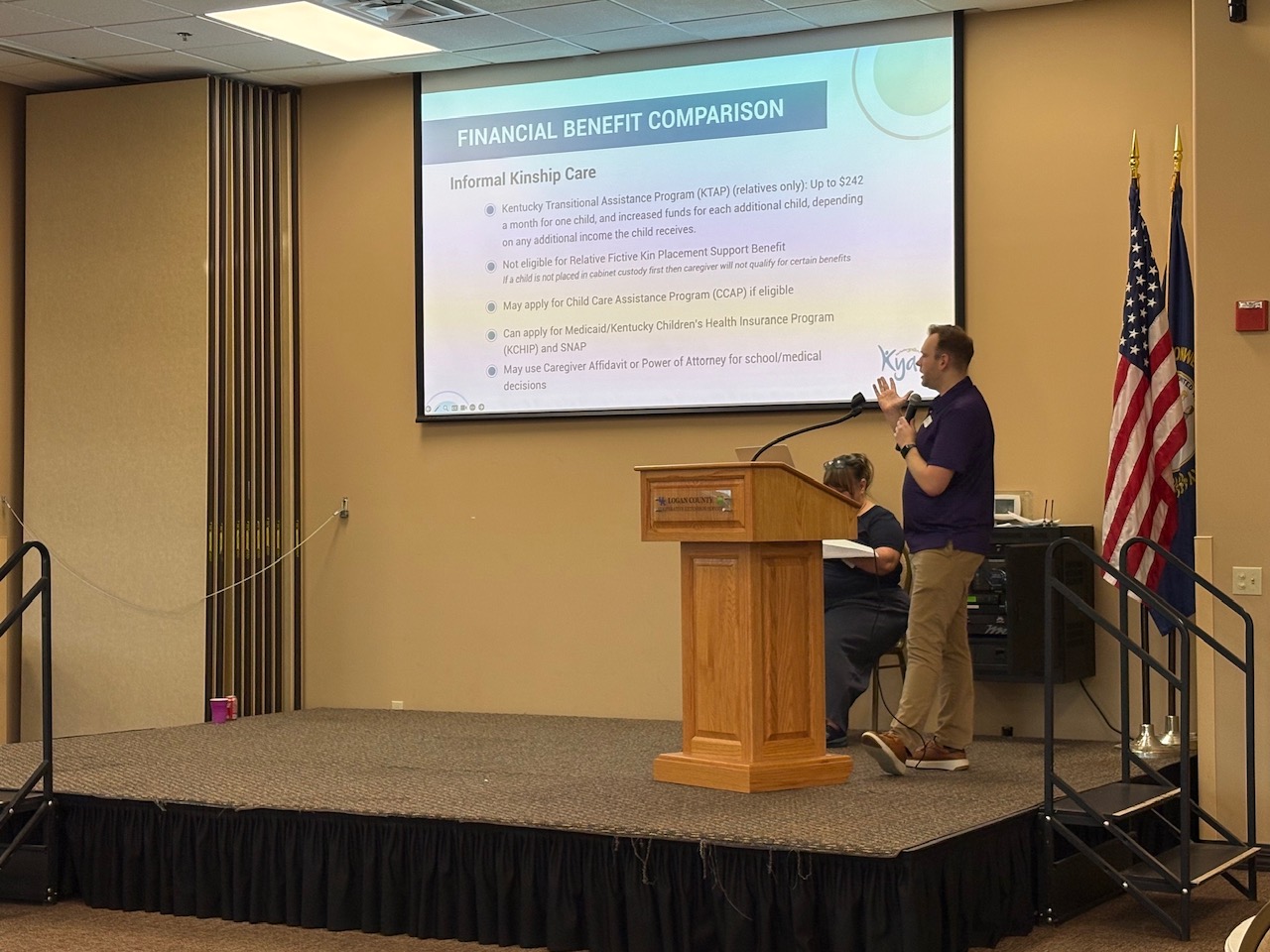
At a recent event I met a grandparent on a fixed income who wasn’t sure they could afford to sign their grandchild up for sports because of the $40 cost. After years of stepping up in many ways for the child, they did not realize that they may be eligible for child-only KTAP assistance that would help meet the child’s needs. And they confessed being a little reluctant to accept some help because they didn’t want to take something that someone else needed more. At the Kinship Connections event, they talked with Kinship Navigators and others who explained their options.
Supporting Kinship Families
Positive childhood experiences have been shown to help build resilience in children, and supports, including financial assistance, that reduce stress and provide options for kinship caregivers can contribute to building strong kinship families and strong Kentucky communities.
Each kinship family has a unique community of care, and their considerations and eligibility for permanency, benefits, and support will differ.
In Kentucky, child-only KTAP assistance is available to some kinship caregivers who are not receiving foster care payments for the child. Child-only KTAP serves as a mechanism for child support the child would not otherwise receive.
- It can be a lifeline for a kinship caregiver who is on a fixed income or making low wages, helping to pay for necessities or activities for the child that will contribute to their well-being.
- Since the assistance is tied to the child’s income rather than the caregiver’s, there is no caregiver “income-cliff” where the child will be denied assistance.
Subsidized permanent custody (SPC) is a permanency option available to eligible foster kinship families.
- To qualify, the child must have been placed with the relative or fictive kin caregiver as an approved foster care placement for at least six consecutive months.
- SPC allows the caregiver to assume permanent custody of the child while continuing to receive financial assistance and other supports.
- Beginning July 15, 2026, eligible relative and fictive kin caregivers have 120 days after receiving temporary custody to pursue foster parent approval, with additional opportunities after certain qualifying events.
The goal of the Kinship Families Coalition of Kentucky and Kentucky Youth Advocates, through the Kinship Connections events, is to increase community connections and awareness of available legal and benefits options for kinship caregivers. During National Kinship Care Month, we are here to lift up the voices and needs of kinship families to help make Kentucky the best place to be young.
A special thank you Casey Family Programs and Wellcare of Kentucky for making these events possible.




Leave A Comment