
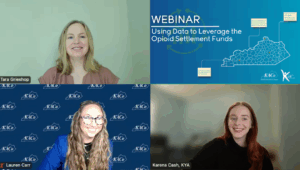
 Last week, Kentucky Youth Advocates hosted a webinar about the Opioid Data Dashboard on Children and Families and how it can be used as a tool for informing the use of opioid settlement funds. KYA staff members were joined by Lauren Carr, Opioid Settlement Advisor with the Kentucky Association of Counties (KACo), a partner in making information available to communities as they invest the funds from the opioid settlement.
The opioid settlement funds, which will be available to Kentucky and every county for the next 15 years, create a unique opportunity to not only expand treatment but also address prevention and the underlying challenges that have contributed to the opioid epidemic in Kentucky. Children across the Commonwealth have been impacted by the opioid epidemic, and investing in their future can prevent another generation from facing addiction.
KYA staff provided an overview of the Opioid Data Dashboard, which presents data by county across a range of issues, including:
- Preventing the risk factors for substance use to occur (such as experiencing adverse childhood experiences);
- Preventing initiation of substance use;
- Preventing increased or more intense use through early intervention and treatment; and
- Addressing the long-term consequences and fall-out for families and children.
Beyond data, the Opioid Data Dashboard provides a number of other resources to support communities in making decisions about how to make the best use of county opioid dollars. The dashboard includes:
- Concrete action ideas on each data page that have been shown effective at addressing the related data.
- Examples of efforts that counties across Kentucky have undertaken that could be replicated; and
- A table of resources about evidence-based programs related to each section of data, as well as information about how the program could align with allowable expenditures under Kentucky law for opioid settlement dollars.
Karena Cash, Data & Research Director at KYA, demonstrated how a county might review the data and identify areas of strength and areas for improvement. The example showed how to identify where a county stands out and how a community might identify options for taking action to improve an area of concern.
Lauren Carr provided information on county investments and shared examples of what counties are doing in the areas of prevention, treatment, harm reduction, recovery support, and leadership/training. Currently, no reporting structure exists for county spending, and the information gathered by KACo and shared on the dashboard captures what is known about county spending. Additionally, Lauren shared insight on how community members might approach county leaders about potential options for addressing county needs and creating a brighter future for Kentucky communities.
To complement the webinar, we have several exciting updates and opportunities related to the dashboard:
- We have added NEW county-level data to the Opioid Data Dashboard on factors such as incarceration for drug offenses and school prevention programming. To stay up to date on new data on the dashboard, sign up for email updates.
- We can give presentations, host community conversations, or provide 1:1 technical assistance on the dashboard to help you, your organization, and other community leaders work through the data on the dashboard and identify solutions! You can request a presentation, community conversation, or TA here.
If you were not able to join, you can access a recording of the webinar below.



Leave A Comment