
Updated March 1, 2024
 Life as anyone knows it can change with one knock or phone call.
“I’m from Child Protective Services. There’s an allegation of child abuse or neglect in your household I need to discuss with you. May I enter?” “This is the local child services agency. We have your niece at our office. Can you be here in the next hour; otherwise, we will need to put her in foster care.” “We have removed four siblings for physical abuse and would like to place them all together. Are you able to take placements in your home at this time?” “I am a social worker; I need you to pack a bag and come with me.”
All children and their parents deserve the opportunity to thrive safely and together whenever possible. But sometimes families need a little extra support, which may be outside the home whether that’s from relatives, friends, or community members willing to step up and fill a need.
Despite the nature of the circumstances, family questioning and possibly separation–temporary or permanent–is not easy. It’s also not an easy job for the agency staff involved. Caseworkers remain on call for the next bigger crisis, manage multiple loads, have paperwork deadlines, and have to process secondary trauma as a welfare professional.
Child welfare involved groups including foster youth, foster parents, birth mothers and fathers, and relative and fictive kin caregivers enter the system in an instant and many exit the system reporting having felt alone, not knowing what their rights were, and not knowing what to expect.
But individuals and families are not alone. There are many who are walking or have walked in the shoes of those in and beyond the system.
During the summer months of 2023, Kentucky Youth Advocates, with support from Casey Family Programs, partnered with lived experts to gather the collective wisdom of those with both current and former experience with the child welfare system. Together, they conducted focus groups and interviews across all nine Department for Community Based Services regions, with over 100 participants representing all involved groups. Questions during these discussions included asking what they wish they would have known going into the system, what advice do they have for others, and what do they view as essential knowledge throughout the process.
The summary, Building the Voices of Lived Experience: Lessons Learned from Navigating the System, breaks down the themes, quotes, concerns, and recommendations heard from those with living and lived experience. The most common thread amongst all the responses was a clear need for improved communication.
This summary is one piece of the Navigating the Child Welfare System project. The goal of gathering the information is to continue discussions and support for not only individuals and families but also child welfare agency staff on best practices and critical information to provide so we can all work together toward improved outcomes and positive changes to the overall child, family, and community wellbeing system.
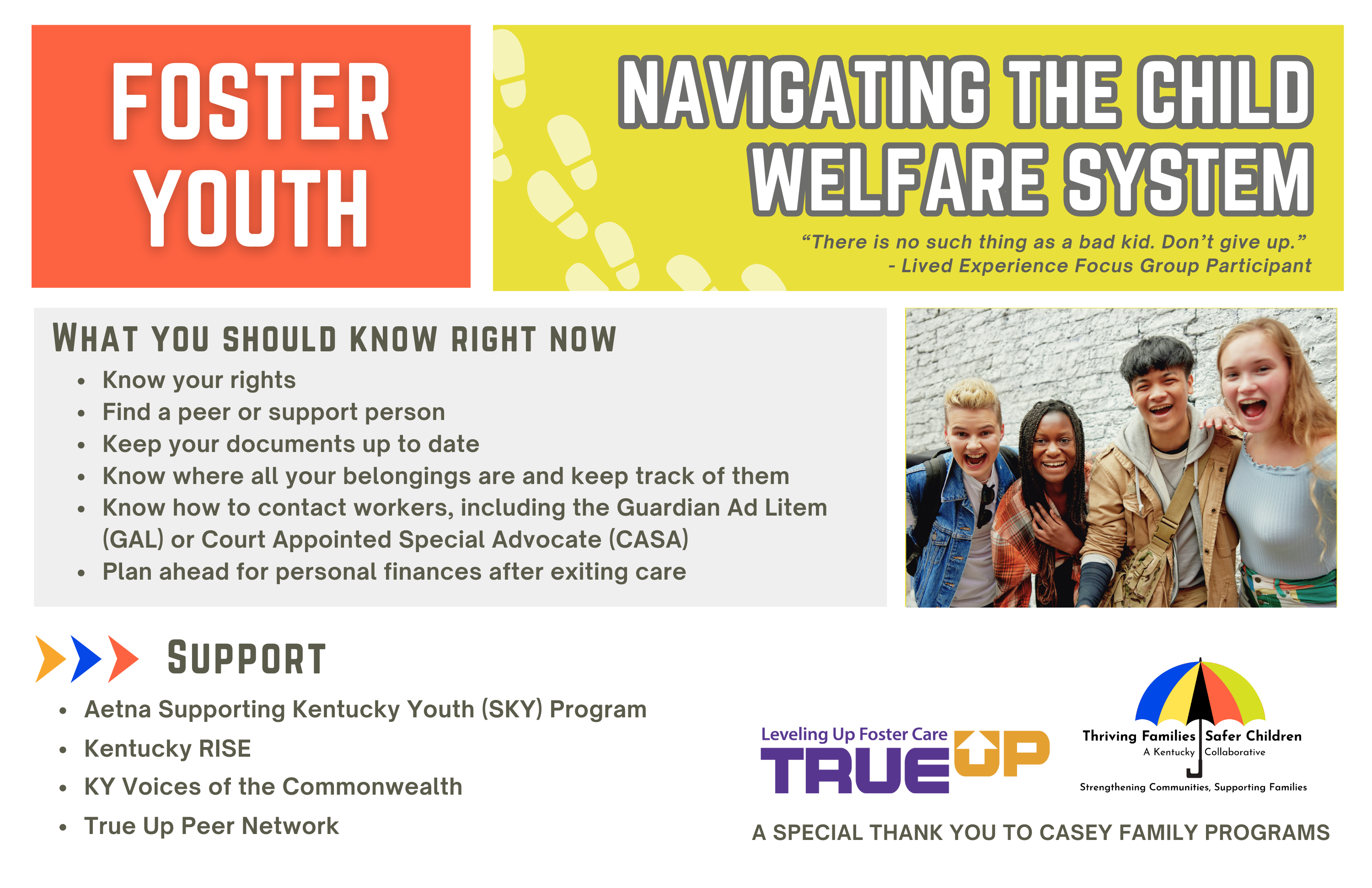
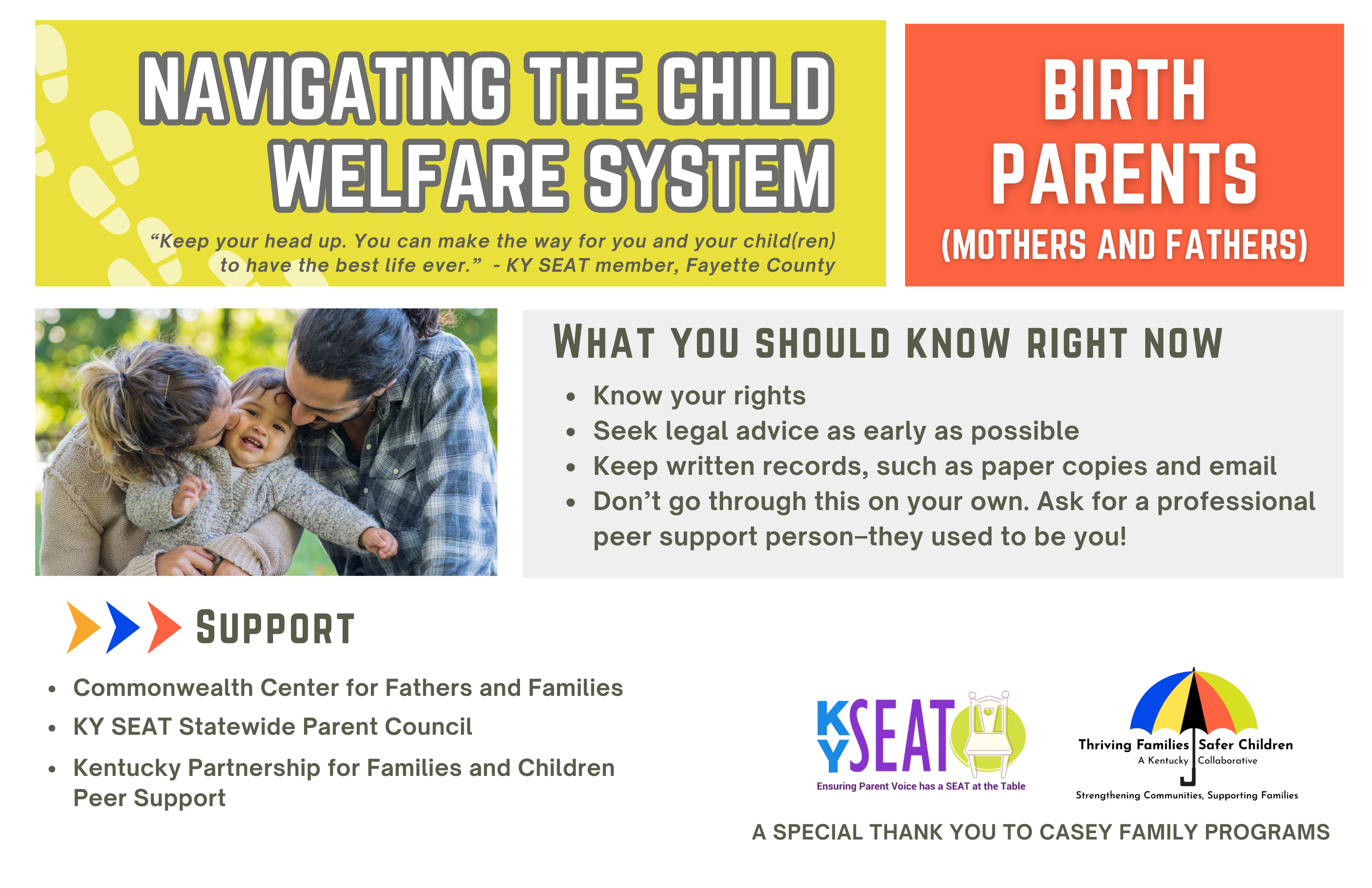
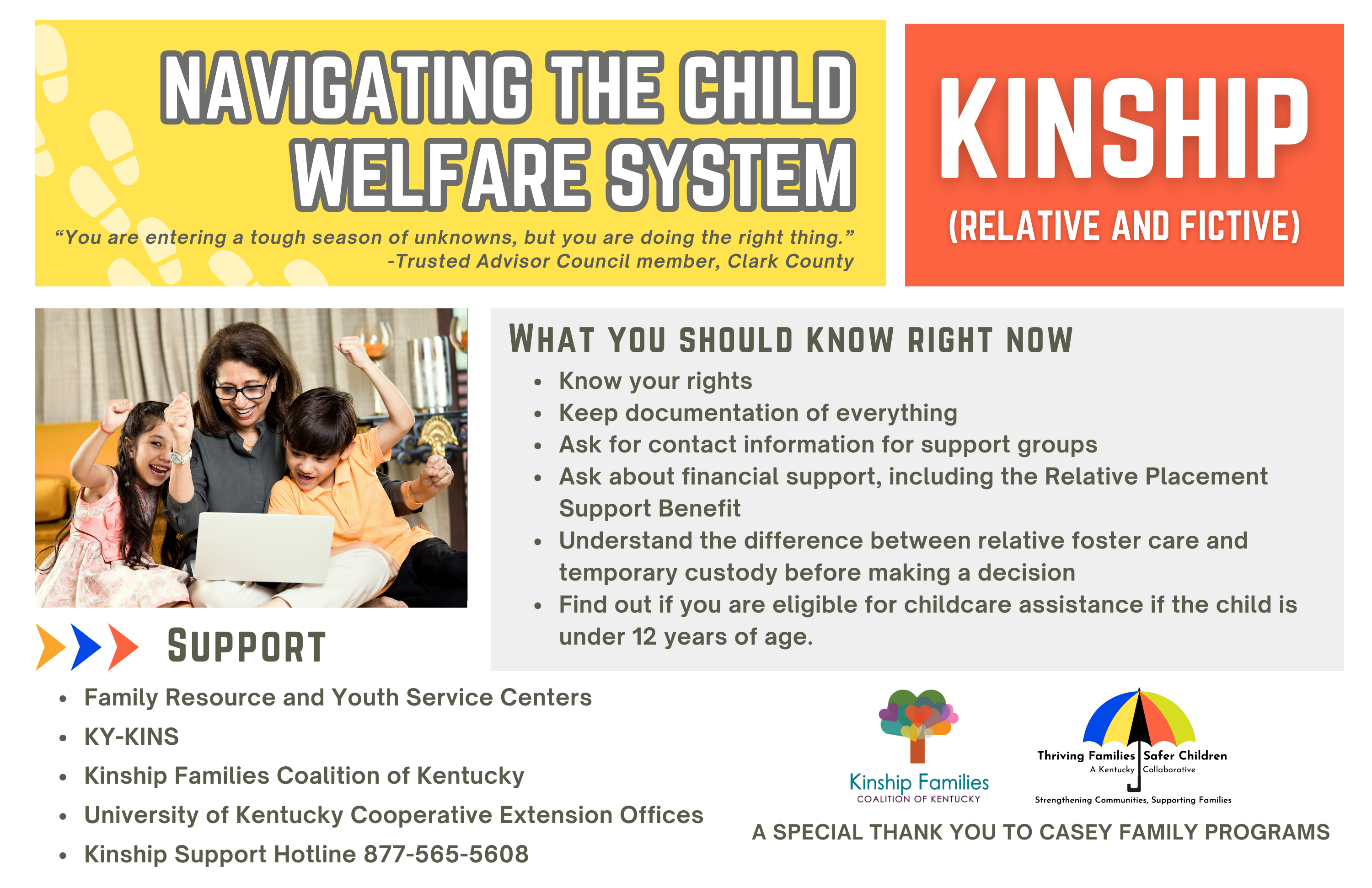
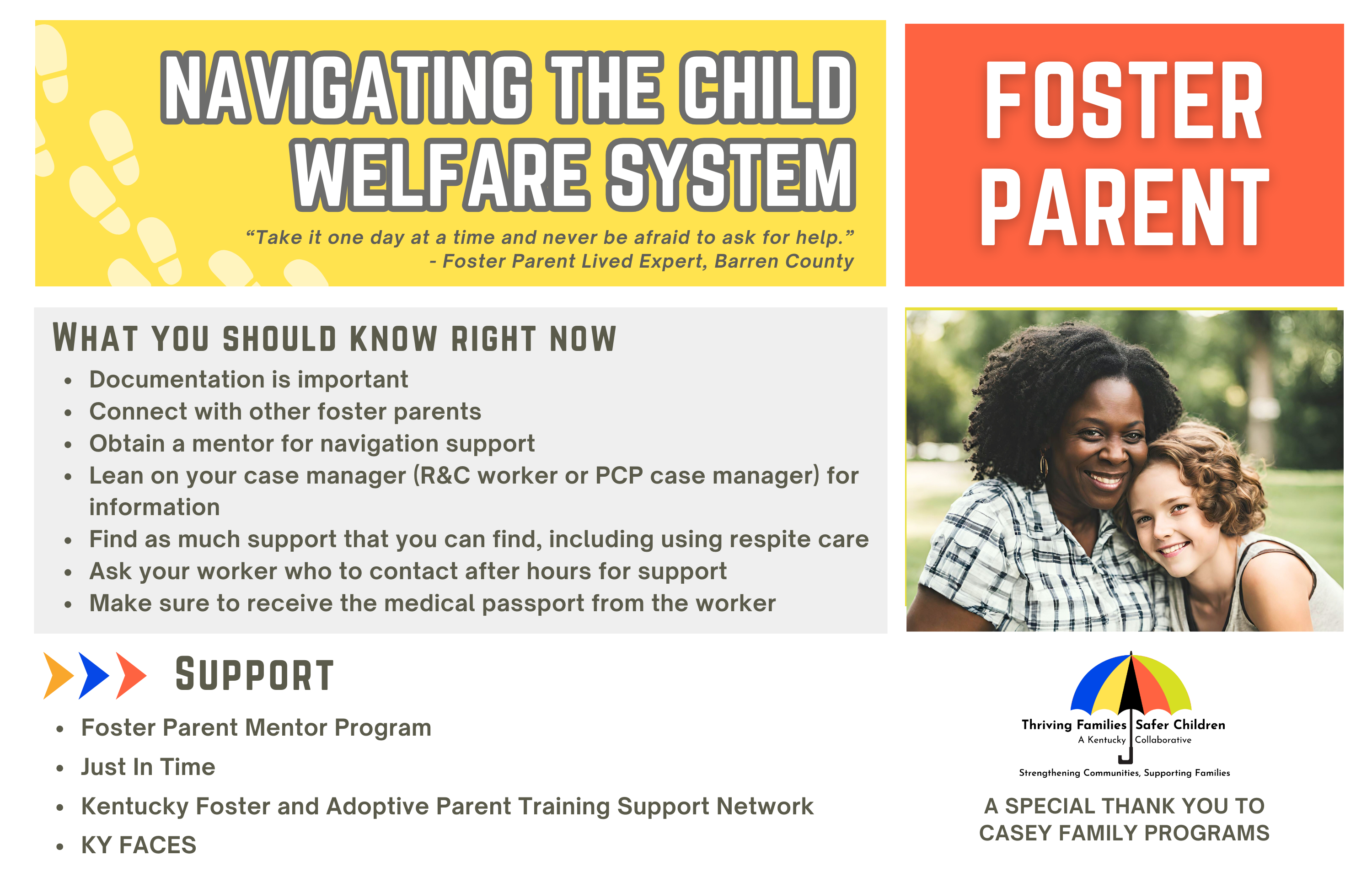
Stay tuned for continued developments from this work; including resource cards for child welfare involved groups (BELOW) and a caseworker tip sheet. Following the national Thriving Families, Safer Children movement guiding principles, we hope that by lifting the voices of those with lived experience and co-designing with lived experts and agency staff, ultimately we can create a more equitable and just system for all.
A special thanks to the lived expert members, including those from KY SEAT-Kentucky’s statewide birth parent council-and the Trusted Advisor Council, for their involvement in this project! For more information on Thriving Families, Safer Children Kentucky visit https://kyyouth.org/tfscky.



Leave A Comment