
By Casey Lane, Intern at Kentucky Youth Advocates
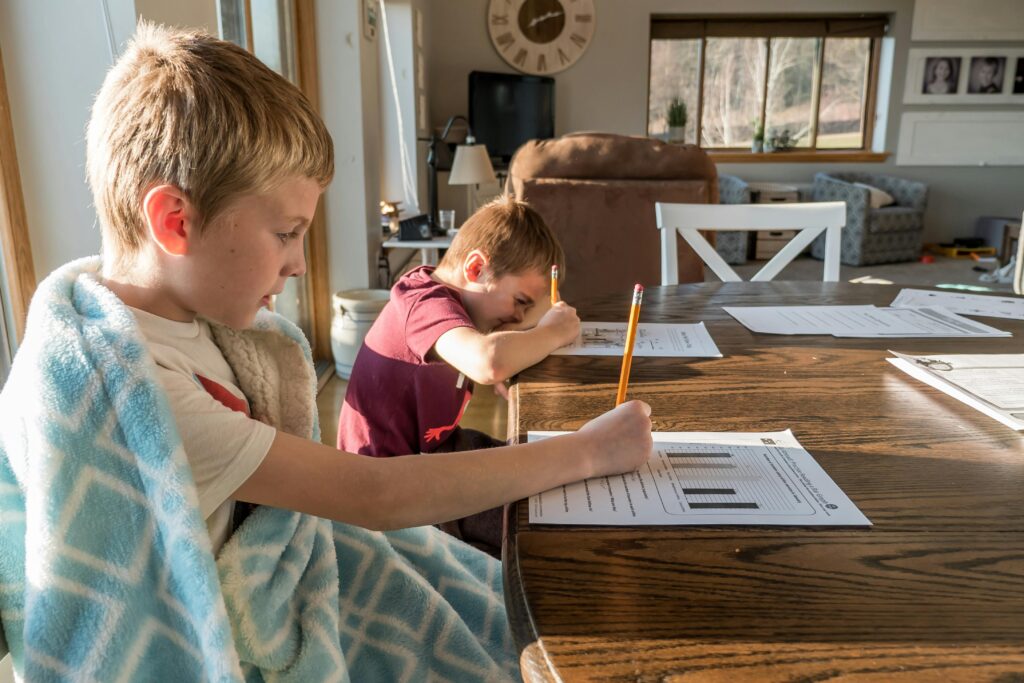 What is homeschooling?
Homeschooling, loosely defined as when a student has been withdrawn from public school and is educated through a private or home setting, has seen an unprecedented increase in Kentucky. Roughly 38,222 Kentucky children were homeschooled during the 2022-2023 school year, a 56% increase from 2017-2018. In some districts spanning from rural Pulaski County to metro Fayette County, homeschooling grew as much as 75%.
Kentucky’s increase in homeschooling is slightly ahead of the increase on the national average since 2017 of 51%. For the 2023-2024 school year, the Kentucky Department of Education cites that 41,016 children were homeschooled, with a 7.3% statewide increase from the previous year. This upward trend seems to cross all demographics and rural, urban, and suburban lines through Kentucky and the nation.
Impact of the Pandemic
COVID-19 undoubtedly played a part in this homeschool boom, as the school shutdowns and non-traditional instruction allowed parents the opportunity to try at-home learning for the first time, with some potentially realizing it benefitted their children and families. For some families with health conditions and special needs among their loved ones, keeping their children home and away from viruses wasn’t a temporary necessity that simply lifted along with the shutdowns, but a need that existed before COVID-19 and had a heightened priority thereafter.
The pandemic may have acted as a catalyst that brought homeschooling to the forefront for families who had not previously considered it. However, this upward trend in homeschooling has been on a steady rise for decades. A 2018 report by Kentucky’s Legislative Research Commission’s (LRC) Office of Education Accountability referenced this steady increase in homeschooling, finding the 3.6% of Kentucky’s school-aged children who were homeschooled at the time was slightly higher than the national average even then.
Why do some parents choose to homeschool?
The LRC’s 2018 report found that reasons behind parents’ choice to homeschool have largely included mistrust in the public school system, whether that be in regards to school performance or quality, or to information or views that conflict with religious, political beliefs, or other identities and ideologies. With public schools often being at the center of divisive social and cultural discussions, as well as the major focus of local, state, and federal policy, some parents may be less comfortable with some changes that are happening or could come. For example, one significant shift in the homeschooling trend is the rise in Black families homeschooling. Praising the individualized attention and culturally supportive environment, more Black families are finding homeschooling to be empowering for their children, in contrast with the disciplinary actions in some public schools disproportionately affecting Black children. Parents of children with disabilities, special needs, or behavioral health conditions may also choose homeschooling to provide the individualized attention and care their child requires, as a result of having experiences of being dissatisfied with public schools’ approach or response to their child.
Implications of Homeschooling
All children deserve a safe and supportive educational environment that meets their unique needs and adequately engages their interests and strengths to promote learning, and parents have the right – and should exercise the right – to make educational decisions in the best interests of their children. There are implications from the boom in homeschooling, however, which lead into discussions of school choice, public school funding, quality, and accountability.
Most importantly, the increase in homeschooling necessitates exploration of the risks of homeschooling as it is currently regulated, or by some measures, rather unregulated in Kentucky, as well as what the increase in homeschooling may mean for the outcomes of our children and future homeschool alumni.
Casey’s Homeschooling Story
As just one former homeschooled Kentuckian, I am honestly fearful of what the rise of homeschooling may mean for Kentucky children. It is encouraging to see how the pandemic brought some parents towards homeschooling in a way that is benefiting their children and families, and I understand and I commend any parent for taking on the incredibly hard task for the best interest of their children. However, I know that in my experience with “homeschooling,” virtually no education was happening for about 5 years, and what was originally intended for my sibling and I to receive an individually tailored Christian education became a way in which neglect and abuse were allowed to prosper unchecked.
The same lax and virtually nonexistent homeschool policies that were in place during my experience in the early 2000’s are still the policies today. I also know that my experience with “homeschooling” is not uncommon. While I was incredibly lucky that I had extended family that intervened to eventually get me back into public school at a crucial time, I know countless others were and are not so lucky.
Even though I reentered public school, I had to overcome adversity, both academically and socially, and even as an adult in my 30s who is working towards a graduate degree and has been in the workforce for 15 years now, I am still regularly reminded of how my homeschooling experience and educational neglect impacts me. Knowing that there were other abused, neglected, and socially isolated “homeschooled” children like me before, hidden from the peripheral and purviews of society, I can’t imagine how many there are now or how many there will continue to be in the future.
What’s next for homeschooling?
Homeschooling intersects so many complex and nuanced topics surrounding parental rights, children’s rights to education and safety, religious freedom, disability rights, and racial and socioeconomic equity. Public school performance, effectiveness and appropriateness of district policies and procedures, as well as the ability of schools to build and maintain supportive school communities are also called into question when examining the broader context surrounding homeschooling.
The good news is that we can model policies, backed with research and data, that can address many of the concerns surrounding flexibility in educational settings. We can also create policies that address many of the concerns surrounding homeschooling to empower parents and families, while supporting homeschooled youth.
This blog post hopes to be the first in a series on issues surrounding homeschooling in Kentucky, including the benefits, risks, as well as discuss some recommendations that can promote responsible homeschooling, protect homeschooled children, and empower current or future homeschool alumni.
Photo by Jessica Lewis 🦋 thepaintedsquare via Pexels



I respect Casey’s opinion on homeschooling and her experience and was hoping you could also find a successful homeschooling story?
[…] no wonder Kentucky’s homeschooling rates have soared in recent years—up 56% since the 2017-18 school year statewide, and up as much as 75% in some […]
Anyone know where I can track the number of home schooled students by county? Particularly Christian County? Thanks!