
 The COVID-19 pandemic highlighted the prevalence of mental health challenges across the nation, especially among youth. While there were policies proposed to expand access to and affordability of mental health treatment and to improve social indicators of well-being, youth mental health is still declining according to a recent report from Child Trends. Improvements in social indicators of well-being have caused an increase in the thriving index for youth, however, indicators of depression, anxiety, and suicide have worsened.
These mental health challenges are especially prevalent for youth of color due to greater stressors, meaning that policy changes need to prioritize mental health equity for our young people.
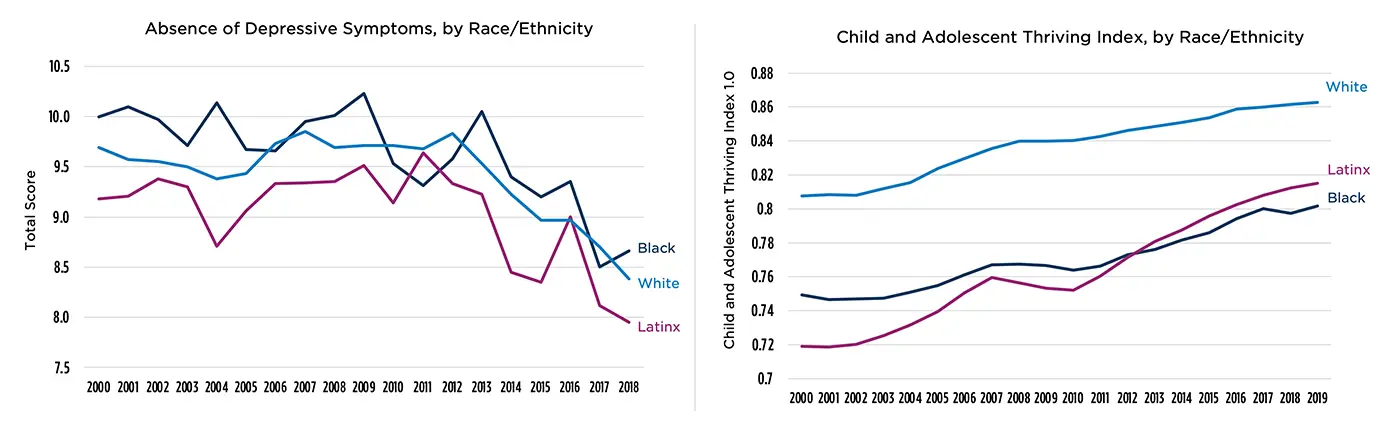
Though historically, Black youth are disproportionately exposed to social and environmental stressors, recent reports showed unexpected similarities in mental health outcomes between Black and White youth. This may be due to several factors such as:
- Black youth typically experience a higher level of resilience due to cultural capital
- Bias in measurement tools may not provide accurate representation
Data shows that mental health in our young people is declining despite the thriving index rising. So why is there a contradiction between the two?
Researchers believe that the prevalence of the following could be contributing to the decline:
- Social Media
- Racial Violence
- School Shootings
- Opioid Epidemic (very prevalent in Kentucky)
- Lower resilience levels in children due to the change in parenting techniques
In order to truly understand why our young people are experiencing more challenges with their mental health, professionals and researchers must prioritize efforts to collect more data and increase their ability to examine racial and ethnic groups. Additionally, elected officials must make policy changes and investments that improve young people’s access to qualified mental health providers and that prioritize prevention efforts.
We are shaping our future generation, which requires a holistic focus on their well-being.
Photo courtesy of Dreamstime




Many people seek professional counseling Tampa options to strengthen relationships, manage stress, or set goals—making therapy a powerful tool for personal development, not just recovery