
Unsafe access to firearms is one of the greatest threats to Kentucky kids’ safety. Injuries from improperly stored firearms are the second leading cause of death among children and teens ages 1-17 in Kentucky. Nationwide, the situation is even more grim – injuries from firearms are the leading cause of death for children, surpassing motor vehicle accidents.
The Issue at Hand
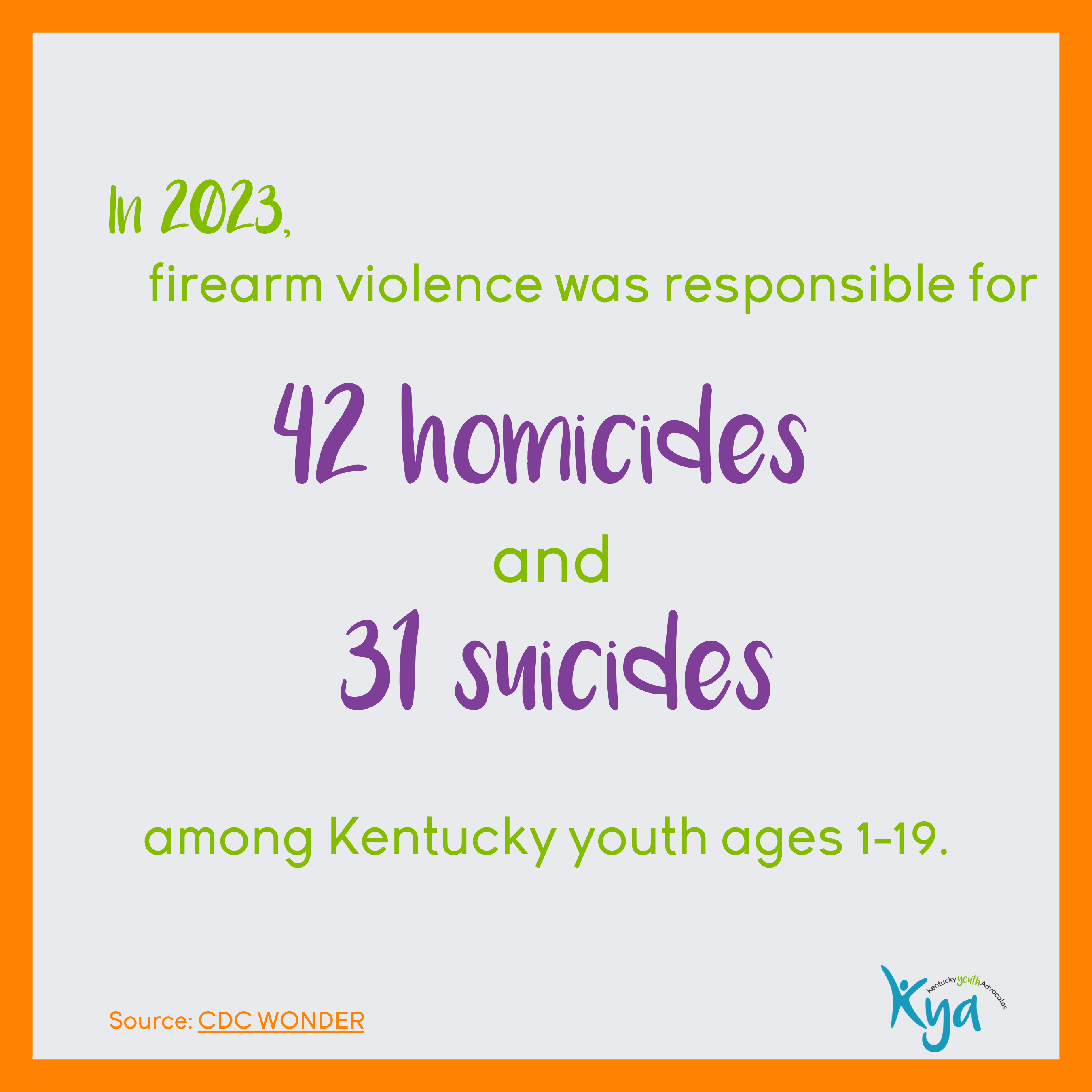 In 2023 alone, firearm violence was responsible for 42 homicides and 31 suicides among Kentucky youth ages 1-19. Beyond these fatalities, unintentional firearm injuries present another layer of harm. From 2016 to 2023, an average of 19 emergency department visits per year involved youth aged 10 and under suffering injuries from improperly stored firearms.
Immediate action is needed to protect our most vulnerable Kentuckians. The lack of child access prevention laws leaves children vulnerable to preventable injuries and deaths, whether through accidental access to firearms or their use in moments of crisis.
Policy Examples: Learning from Other States
Florida and Iowa have each implemented child access prevention laws aimed at reducing the risk of children accessing firearms. These laws impose criminal liability if a minor accesses a firearm due to unsafe storage and that access subsequently causes harm or unlawful use. In these states, firearm owners must securely store firearms—either in a locked box, with a trigger lock, or in another secure location—when minors are likely to gain access.
In Florida, retail firearm sellers are required to provide written warnings about safe storage during firearm sales and display signage to emphasize the dangers of unauthorized access by minors. The required warning states:
“IT IS UNLAWFUL, AND PUNISHABLE BY IMPRISONMENT AND FINE, FOR ANY ADULT TO STORE OR LEAVE A FIREARM IN ANY PLACE WITHIN THE REACH OR EASY ACCESS OF A MINOR UNDER 18 YEARS OF AGE OR TO KNOWINGLY SELL OR OTHERWISE TRANSFER OWNERSHIP OR POSSESSION OF A FIREARM TO A MINOR OR A PERSON OF UNSOUND MIND.”
Both Florida and Iowa have lower rates of overall gun deaths, as well as youth (ages 1-19) gun deaths, compared to Kentucky. Notably, Iowa ranks as having the 10th lowest rate for both categories in the country. These measures demonstrate how legislation can play a crucial role in protecting children by emphasizing accountability and public education.
Kentucky can look to these states as models for creating effective policies to reduce firearm injuries and deaths among its youth.
What’s Happening in Kentucky?

In recent years, Kentucky state legislators have introduced several proposals to address firearm safety, though none have became law:
- Representative Banta’s Proposed Bill for 2025: Seeks to hold parents or guardians civilly liable if their child injures someone with a firearm under certain circumstances, such as knowingly allowing access to a firearm despite a history of violent behavior or intent to use it unlawfully.
- Senate Bill 13 (2024): Proposed to temporarily restrict firearm access for individuals deemed a danger to themselves or others, allowing law enforcement to petition courts for orders that prohibit firearm possession and require surrender or transfer of firearms.
- Senate Bill 190 and House Bill 460 (2024): Proposed to allow individuals to voluntarily restrict their firearm access by adding themselves to a state-managed list tied to the National Instant Criminal Background Check System (NICS), with options for temporary surrender or permanent disposal of firearms if self-harm is a concern.
- House Bill 518 (2024): Proposed requirement of firearm and ammunition sellers to display educational materials on firearm safety, suicide prevention, and conflict resolution, developed by the Cabinet for Health and Family Services.
- Senate Bill 56 and Senate Bill 262 (2024): Proposed measures to ensure safe storage of firearms by requiring owners to secure firearms in locked containers or with trigger locks when not in their immediate possession.
While the proposal of these bills shows progress, more work is needed to ensure comprehensive solutions that protect Kentucky’s children from firearm-related harm.
A Call to Action: Advocates Needed
Policymakers cannot enact change alone—they need public support. Advocates, parents, and child-serving professionals play a vital role in pushing for stronger firearm safety measures. Look up your state Senator and Representative and share with them how you see firearm violence impacting young people in your community.
Check out these national, statewide, and local campaigns focused on preventing child deaths due to a firearm:
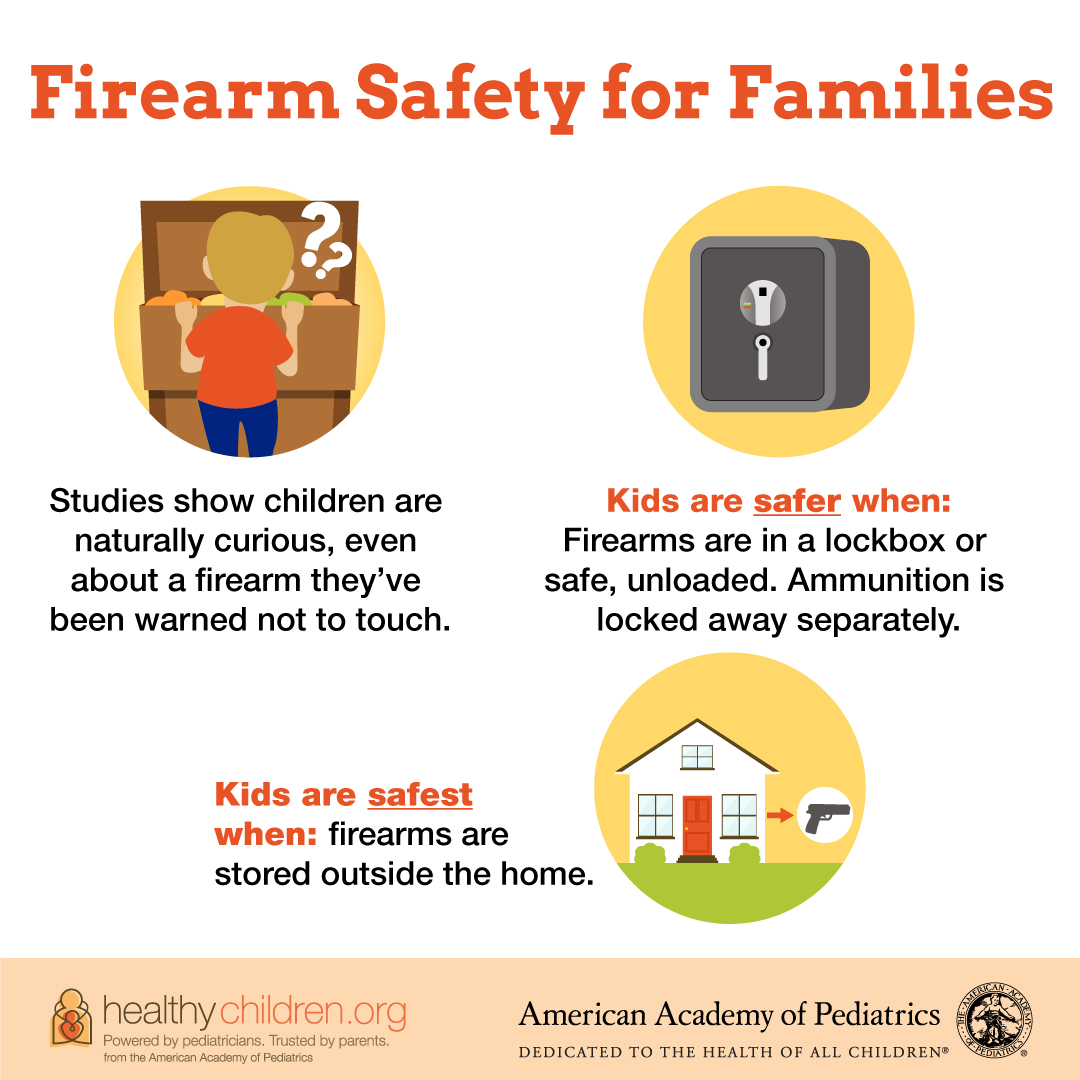 Firearm Safety Campaign Toolkit – The American Academy of Pediatrics offers a series of social media graphics and other resources to promote firearm safety for families, including safe firearm storage and talking about firearms before a playdate.
 - Be SMART – A campaign launched in 2015 to reduce and prevent child gun deaths. SMART stands for: Secure all firearms in your home and vehicles; Model responsible behavior around firearms; Ask about the presence of unsecured or loaded firearms; Recognize the role of firearms in suicide; Tell others to be SMART.
- Whitney Strong – A campaign focused on responsible gun ownership and ending gun violence. This organization takes a non-partisan approach to legislation, acts on data to implement educational opportunities, and funds research to reverse the pervasiveness of gun violence.
- Future Healers – Future Healers is an outreach program through University of Louisville that builds strong relationships between medical professionals and youth most impacted by gun violence in Louisville.
- Peace Education Program – Hosts a program in Louisville called Pivot to Peace for survivors of stabbings and gunshot injuries. This program allows for opportunities to support individuals who have been impacted by gun violence and to develop plans to stay safe and address the factors that may have put individuals at risk for violence.
Whether it’s contacting legislators to express support for child access prevention laws or starting conversations within your homes and communities, every action counts to improve child safety.
Photo by Ketut Subiyanto via Pexels



Leave A Comment