
Updated April 9, 2026
In 2025, the Blueprint for Kentucky’s Children and Bloom Kentucky‘s 2025 legislative priorities included the Family Preservation and Accountability Act. The proposed legislation would require courts to consider alternative sentences for parents of dependent children who committed low-level and nonviolent offenses. With the hard work of advocates and legislative champions, Senator Julie Raque Adams and Representative Nick Wilson, Senate Bill 122 successfully passed both chambers in 2026 and is expected to be signed into law by the Governor.
By Amanda Hall, Jayden Spence, and Cortney Downs
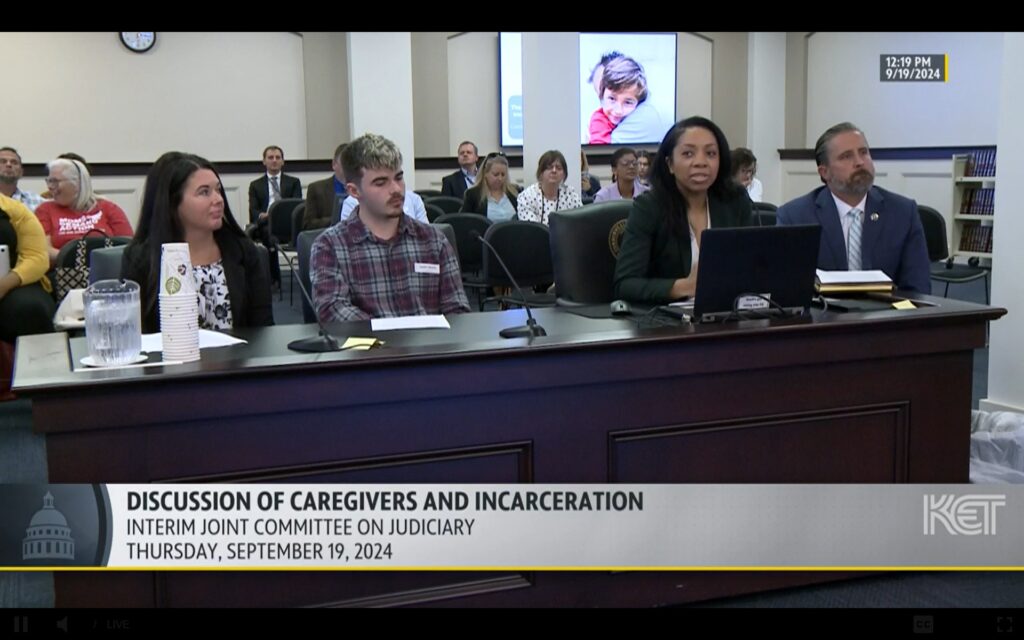 Parental incarceration is an adverse childhood experience that is often described as a shared sentence because of the impact it has on children, families, and broader communities. In Kentucky, more than 115,000 children have experienced a parent being incarcerated at some point in their lives, which is the third highest rate in the nation.
On September 19th, the Interim Joint Committee on Judiciary heard testimony about the impact of parental incarceration on children and potential legislative solutions.
Amanda and Jayden’s Story
When Amanda was in second grade, her mom – “an incredible woman…and the strongest person I knew” – was arrested. Despite being incarcerated for just a short time, Amanda said it left a lifelong impact on her.
“I vividly remember going to school the next day and seeing the newspaper on the teacher’s desk, with a description of my mom’s arrest. I felt an overwhelming sense of shame, and that feeling stayed with me for years, along with a lot of anger. No one ever offered me counseling or reassured me that things would be okay, I just carried it all inside.”
After her mother’s arrest, Amanda lost trust in people “especially authority figures”, and struggled with mental health and processing her own traumas. She began experimenting with drugs, became addicted after being prescribed opioids, and was arrested multiple times before being sent to prison shortly after the birth of her second son.
Jayden was only five-years-old and his brother just five-months old when the police arrested Amanda.
“We were both asleep in the bed with her when it happened. I remember being terrified as I watched her being taken away in handcuffs.” At that moment, he said his life forever changed.
Jayden explained that having an incarcerated parent “meant that our lives were constantly shifting to fill the void she left behind. My routines changed and different people came in and out of my life. Our family dynamic was completely disrupted and I was left trying to navigate an unfamiliar world with very little guidance. I often felt a mix of anger and sadness, but there was always this deep sense of longing, hoping for something to bring her back into my life, for things to get better, and for her to escape the situation she was in.”
When a child’s mother is incarcerated, they are more likely to experience disruptions to their living situation, like moving more frequently or, as in Jayden’s case, being placed with a kinship caregiver. While expressing how grateful and fortunate he felt having his grandparents step in to raise him, he also lamented the separation from his brother.
“I missed my little brother. I didn’t get to grow up with him or be the big brother I always wanted to be, a role that meant everything to me.”
And for Amanda, nothing hurt more than being separated from her children. “While I was incarcerated, I missed their first steps, their first words, and my oldest son’s kindergarten graduation. It was devastating.”
“I want the cycle to end with me. So far, I think it will…”
Advocacy to End the Cycle of Incarceration
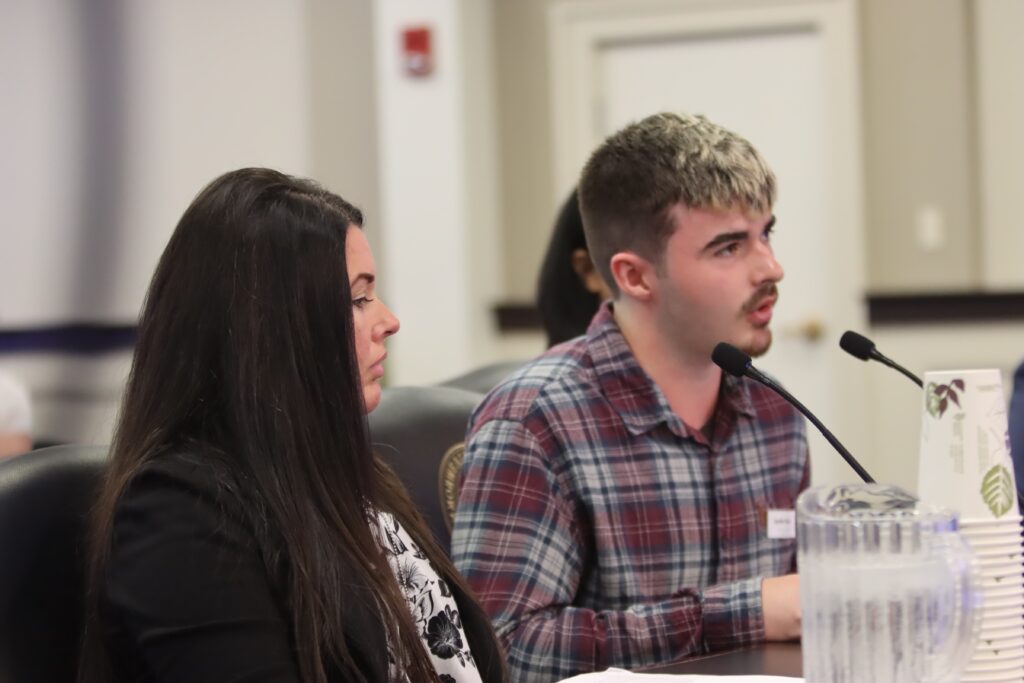 There’s a stigma attached to incarceration, so the outpouring of support that typically accompanies losing or being separated from a parent isn’t the norm when the parent is incarcerated. However, Amanda and Jayden’s experiences perfectly illustrate why comprehensive wraparound supports are so important for this population.
It wasn’t until Amanda was released from prison and “hadn’t seen my kids for years, that I finally got help for my trauma, mental health, and substance use disorder.” She has long-acknowledged her mistakes and expressed “deep regret” for many of her choices, but she also recognizes that “access to help and resources would have done far more for me and my boys than the trauma of incarceration.” Jayden understands that the trauma will always be with him, but also sees it as an opportunity to share his story and help make change.
It’s important to acknowledge the work that advocates and decision-makers have done to address parental incarceration – through resource development, advocating for practice change, and legislative action – while also recognizing the need to continue seeking solutions that balance public safety, appropriate accountability, and consider the impact of incarceration on children.
There are currently seven states with laws requiring Judges to consider ‘caregiver status’ at sentencing, and the early outcomes – keeping parents and children together and reducing recidivism – are promising. Stakeholders will convene this month to draft bill language for consideration by the 2025 Kentucky General Assembly with the support of the Blueprint for Kentucky’s Children, as well as develop messaging and strategies.
In some ways, Jayden considers himself lucky – “I got to see my mom come out of incarceration and be a part of my life again. But for so many others, that’s still just a dream.” – and they both want to work with decision-makers to prevent children from having similar experiences.
“I hope future Kentucky kids don’t have to go through what I did and that you all can make changes for the better, for both them and their parents.”
Amanda Hall is the Senior Director of National Campaigns at Dream.org and Jayden Spence is a sophomore at Morehead University.
For more information on Dream.org and their justice reform efforts lead by advocates who are formerly incarcerated, please check out the Empathy Network.



Leave A Comment