
 LOUISVILLE, KY – When a child is separated from their parent, it’s the kinship and fictive kin caregivers who often step up to provide a familiar, stable, and nurturing home – either temporary or permanent – that preserves familial bonds and cultural connections. In Kentucky, approximately 55,000 children are being raised by a relative or trust family friend, which is at a rate twice the national average.
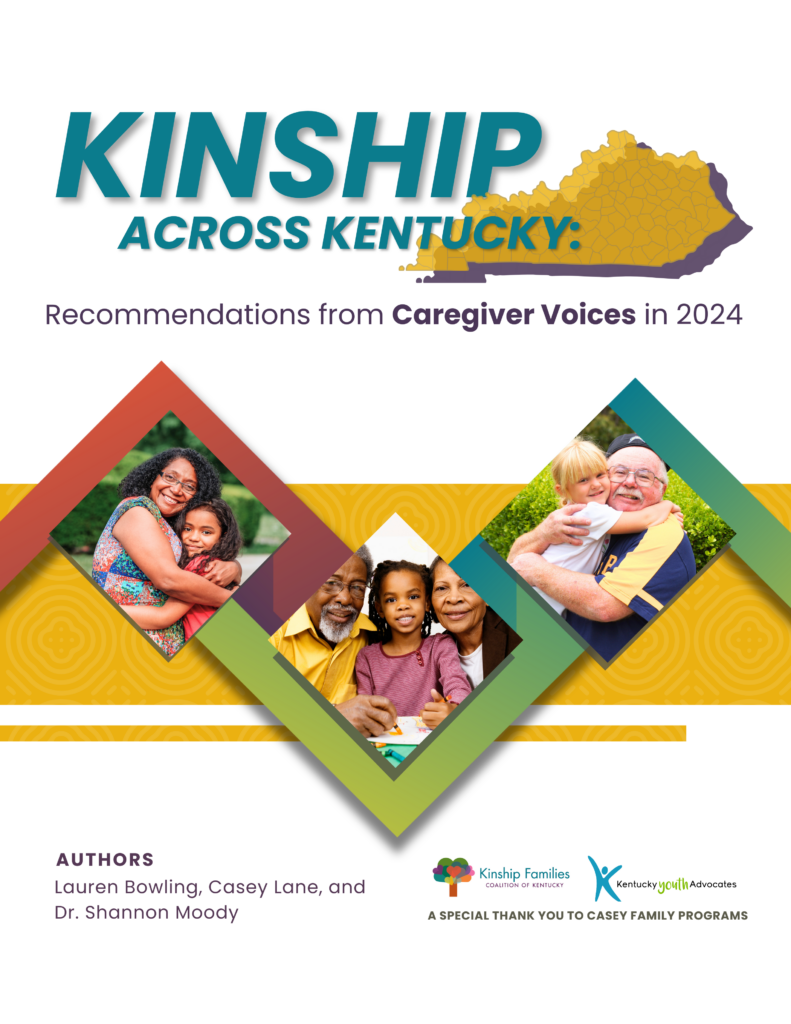
During the summer of 2024, Kentucky Youth Advocates (KYA) and the Kinship Families Coalition of Kentucky (KFCKY) conducted online surveys and in-person listening sessions in all nine Department for Community Based Services (DCBS) service regions to gather feedback from kinship caregivers and service providers, such as health care professionals, school personnel, community leaders, nonprofit agencies, and others. As a result, a new report from KYA and KFCKY, Kinship Across Kentucky: Recommendations from Caregiver Voices 2024, outlines the needs and challenges facing kinship and fictive kin families in the Commonwealth and offers systems and practice level recommendations for improvements that promote the best outcomes for children.
“The pathway to change is by listening and then taking faithful action. The powerful voices of so many kinship caregivers and of those who serve them provide a roadmap to best serve these children and families. Kinship caregivers want to do their best for the children in their care, and we need to do our best to help them along the way,” said Norma Hatfield, kinship caregiver and president of the Kinship Families Coalition of Kentucky.
While the specific needs of kinship families varied slightly by region, the survey responses and listening session participants mostly highlighted challenges in securing basic needs, such as food (53%), clothing (48%), and school supplies (42%). There were also needs for more financial supports, housing assistance, and information technology, identified by one-third of the caregiver participants. Some of the most frequent requests for assistance identified in the listening sessions included peer support, respite care, mental health care, and legal assistance. Similarly, service providers noted the vast needs of kinship families, ranging from basic needs to child care to peer support.
Based on the findings from the surveys, listening sessions, and a review of literature related to best practices, the Kinship Families Coalition of Kentucky offers several recommendations for the Kentucky General Assembly, Department for Community Based Services, and community leaders to consider, including the following examples:
- Expand community-based mentorship opportunities for youth in kinship care and their caregivers
- Provide or facilitate comprehensive reunification services for kinship families to create opportunities for children to return safely to their birth families when appropriate
- Provide family counseling and mediation services for kinship families as part of the DCBS case plan
- Provide comprehensive informational packets and educational materials for new kinship caregivers, including commonly used terms, general timeline expectations, resource lists, and history of the child
- Utilize best practices to actively seek the most appropriate placement for the child when identifying kinship and fictive kin caregivers, including addressing disproportionality in the placement of children of color into foster care instead of kinship care
“Relatives and fictive kin caregivers step up every day to love and provide for Kentucky kids who’ve experienced abuse or neglect – and Kentucky leaders and communities should step up to do more to support those kinship families. Our hope with this report is to galvanize action at the state and local levels to think pragmatically as well as creatively to ensure these families can thrive,” said Dr. Shannon Moody, Chief Policy & Strategy Officer at Kentucky Youth Advocates.
Governor Andy Beshear has proclaimed September as Kinship Care Awareness Month, a time to acknowledge and celebrate the importance of kinship caregivers and the children they are raising in stable, loving, and nurturing households.
In addition to the new report, the Kinship Families Coalition of Kentucky offers tools for navigating kinship and looking up available resources. Sortable and searchable by county and resource type, the Resource Directory map hopes to promote the awareness and accessibility of available resources in communities across the Commonwealth. View the report and compiled resources at kinshipky.org.
###
About Kentucky Youth Advocates
Kentucky Youth Advocates believes all children deserve to be safe, healthy, and secure. As THE independent voice for Kentucky’s children, we work to ensure policymakers create investments and policies that are good for children. Learn more at www.kyyouth.org.





Leave A Comment