
By Tamara Vest and Shannon Moody
When children cannot stay safely with their parents, research tells us the best option for their success lies in being cared for by grandparents, relatives, or close family friends. Kentuckians value family and we see these caregiving arrangements in many homes across the Commonwealth.
It is estimated that 55,000 children live with and receive care and support from a relative that is not their biological parent in the state of Kentucky. The rate (6 percent) is the third highest in the nation. Many relative caregivers are often the child’s grandparents.
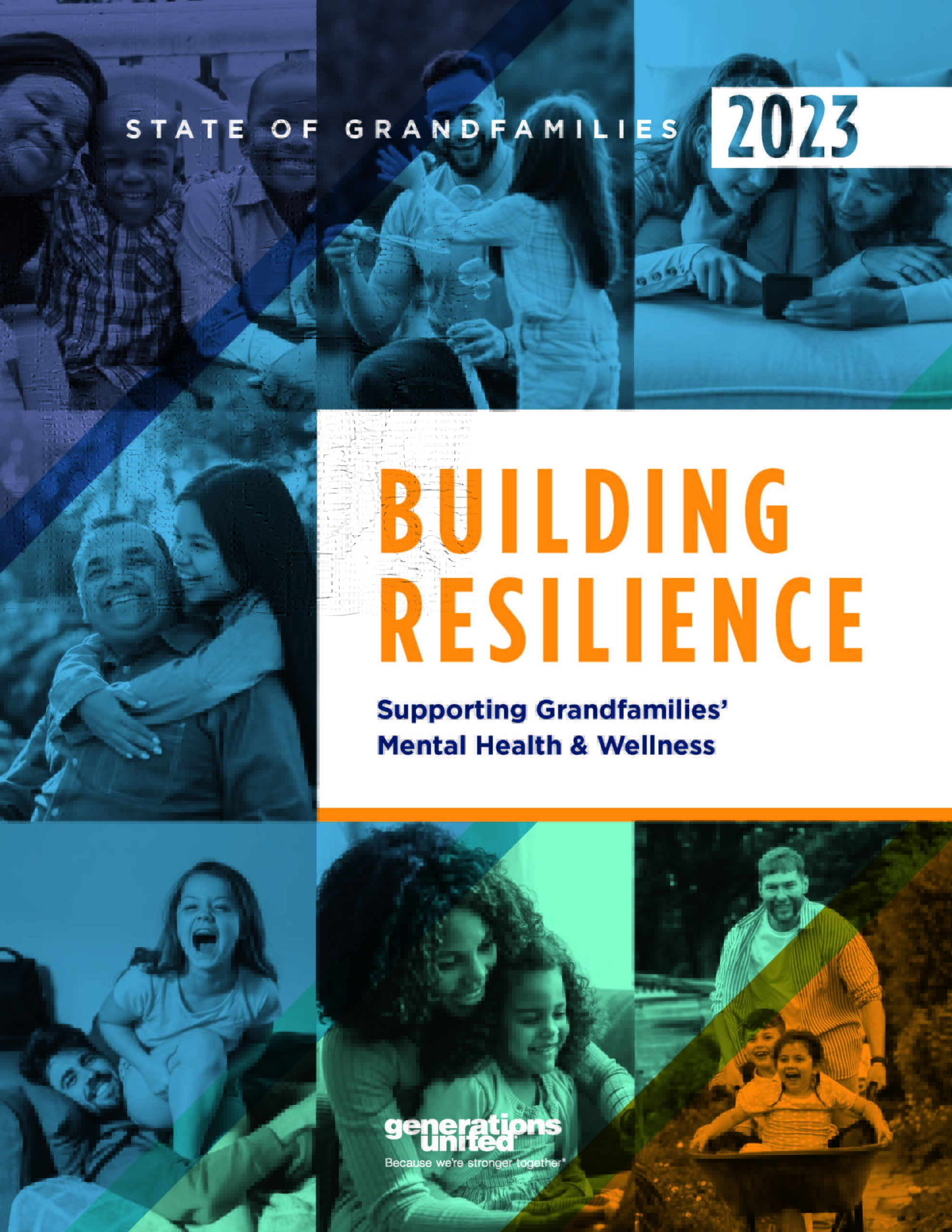
A recent release by Generations United, Building Resilience: Supporting Grandfamilies’ Mental Health and Wellness, 2023 State of Grandfamilies Report discusses how to support grandfamilies, and provides recommendations for states to consider. Below, Kentucky Youth Advocates outlines the report and brings in the Kentucky context.
In the Building Resilience report, the information provided emphasizes the particular challenges that children and their grandparents raising them are facing when it comes to mental health.
Mental Health Issues Among Children, Adolescents and Their Grandparent Caregivers
Children and adolescents, nationally and in Kentucky are facing a mental health emergency. We know that 1 in 6 adolescents in Kentucky ages 13 to 17 experience depression or anxiety. In situations where a child is living with their grandfamilies, children have experienced adversities like neglect, physical abuse, or lived with a parent with substance abuse issues or substance use disorders. Children come to live with grandparents and relatives often as a result of parental incarceration, parental death, deployment, or due to a parent’s struggles with mental health or substance use. These often lead to a greater risk of stressors, trauma, and mental health issues.
Grandparent caregivers help children deal with the effects of the past while also handling their own trauma, stress, grief, and mental health concerns. Along with raising the children, most juggle work, home, and finances. This chronic stress causes a strain on the mental health of caregivers. It is important to advocate for policies and programs that provide necessary stability and security for grandparent caregivers and their mental and physical health needs.
Not only does the report discuss the mental health strains for grandfamilies, it also discusses the financial pressures, legal issues, and the lack of respite care and how those relate to mental and physical well being.
Common Stressors among Grandfamilies
Economic
Thirty one percent of children growing up in grandfamilies are living in poverty. Financial support is inequitable across the U.S. for relative caregivers. In Kentucky, there are often three ways in which grandfamilies become families:
- The first is formally through the child welfare system, where they have the option to become licensed foster parents to receive a monthly per diem in order to financially support the child/children in their home.
- The second is also through the child welfare system but where a relative caregiver chooses to accept custody of the child rather than becoming a foster home, where the grandparent or relative caregivers can access KCHIP (Medicaid), Kentucky Transitional Assistance Program (KTAP), as well as other specified supports determined by the Department for Community Based Services.
- The third route, and most common, is informal arrangements where children living with their grandparents and other relatives never come into contact with the child welfare system, which means they are less likely to access critical supports that are provided through the child welfare system.
The report touches on housing instability or affordability, food insecurity, and the impacts on work among the caregivers. Nationally around 56% of grandparents responsible for grandchildren are in the labor force; that percentage goes up to nearly 72% for grandparents who are ages 30-59. Often grandfamilies have to take leave from work for appointments, court hearings, and to make other arrangements for the children in their care. Anecdotally, we see these issues across the Commonwealth for our grandfamilies, however the mechanisms to identify and measure these issues for kinship caregivers specifically are not in place.
A potential way to address financial hardship is by increasing options for financial supports, specifically by creating access to subsidized permanent custody.
Legal
Grandfamilies may also struggle with custody and guardianship legalities making it difficult for them to consent to healthcare, education, and other necessities for the child. The need for legal supports is especially important for grandfamilies and kinship families who are informally created. Obtaining legal authority can be emotionally draining and costly for grandparents and can cause challenges for all family members involved. And even in kinship arrangements with child welfare involvement, grandparents and other relatives often don’t have the legal knowledge or time needed to choose the best custody options for their family, whether to become foster parents or assume custody.
Mental and Physical Well-Being
The report discusses how grandfamilies may often put their mental and physical health needs on the backburner in order to care for the children in their home. Social isolation, navigating complex systems as a new caregiver, and the family dynamics of the birth/biological parents weigh heavily on grandparent and kinship caregivers. There is a lack of respite care options for grandparent providers and they become increasingly depleted of their time and energy. Advocating for respite opportunities in the form of afterschool programs, in-home care, and camps is essential to keeping our caregivers healthy and our home environments healthy.
Recommendations
Overall, greater access to evidence-informed or evidence based programming and supports that improve the mental health of children in kinship care as well as their caregivers is essential. These programs and supports, some mentioned above, include;
- Access to quality and affordable mental health care for the child, caregiver, and birth parents
- Respite care, both formal and informal
- Peer-to-peer support groups
- Afterschool programming for youth
- Financial supports to reduce economic instability, including a Kentucky-specific solution like subsidized permanent custody
- Access to affordable or sliding scale legal supports
- Promotion of self-care strategies
One of the overarching recommendations includes encouraging states and tribes to use opioid settlement funds to support grandfamilies mental health and wellness. The opioid crisis has been a direct cause of the increase in grandparent caregivers in the state of Kentucky. While the Commonwealth has already begun taking action to invest in programming and supports for prevention and intervention, there is a lot of opportunity to consider how we invest in grandfamilies, as well as broader kinship care to ensure children impacted are supported.
Kentucky’s kids deserve to thrive, and supporting their caregivers is essential to making that happen.



Leave A Comment