
By Theda Simpson-Mosby
 Is there such a thing as a “normal” family? What beliefs do we hold about how “normal” families should function daily? Is it the family with a spotless home, a mom and dad who both work in their chosen professions, parents who head the PTA and coach the little league teams, and children who arrive at school with immaculate clothing and not a hair out of place?
While this may be the reality for some, it is far from the norm for many families today.
Many families face unique challenges, with dynamics shaped by divorce, separation, blended families, or the complexities of single-parent and stepparent households. These situations can involve biological children and stepsiblings living in different homes, language barriers, cultural differences, and economic strain. Life’s relentless hustle, with everyone darting off to different commitments—school events, extracurricular activities, doctor’s appointments, and more—can make it feel like the very fabric of family life is being stretched thin.
Amid this constant whirlwind, maintaining a strong family connection can become challenging.
When unexpected crises emerge, causing additional strain or complete despair, many families are just one phone call away from being reported to Child Protective Services (CPS). We are beginning to understand that CPS investigations can alter families’ lives forever, and not always for the better. Parents and extended family members involved with CPS can experience stigma and judgment, with lingering ripple effects.
This raises the question: For cases where community-based supports or other services could support child safety and family stability, are CPS investigations helping families, or are they sometimes causing more harm than we could have ever imagined? Is there a different approach for CPS that may result in more families seeing CPS as a help?
My Family’s Story
In my situation, the moment of crisis was a logging accident that resulted in the death of my husband—the father of our 3-year-old son, the breadwinner for our family, and the man I had planned to grow old with. This event marked the beginning of a downward spiral into what seemed like a black hole, from which I thought there was no escape. My life would never be the same again. I was left wondering how I would even wake up each day and what that day would look like for my family. The weight of grief and stress took its toll on me and my son, breaking me emotionally and mentally and leading to some very bad decisions. I felt lost and alone, with no support system or help for me and my son.
Some of my decisions led to our involvement with CPS, and eventually, my son was removed from my home. He was taken from the only parent he had left, so not only did he suffer the loss of his father, but he was also ripped from the only certain thing he thought he had left—his mom.
Sadly, my son was never reunified with me. We are genetically hardwired to look to our parents for comfort and safety. They are our “person.” When that is taken from you, the trauma and uncertainty have lifetime and even generational effects that cannot be reversed.
Advocating for Families Like Mine
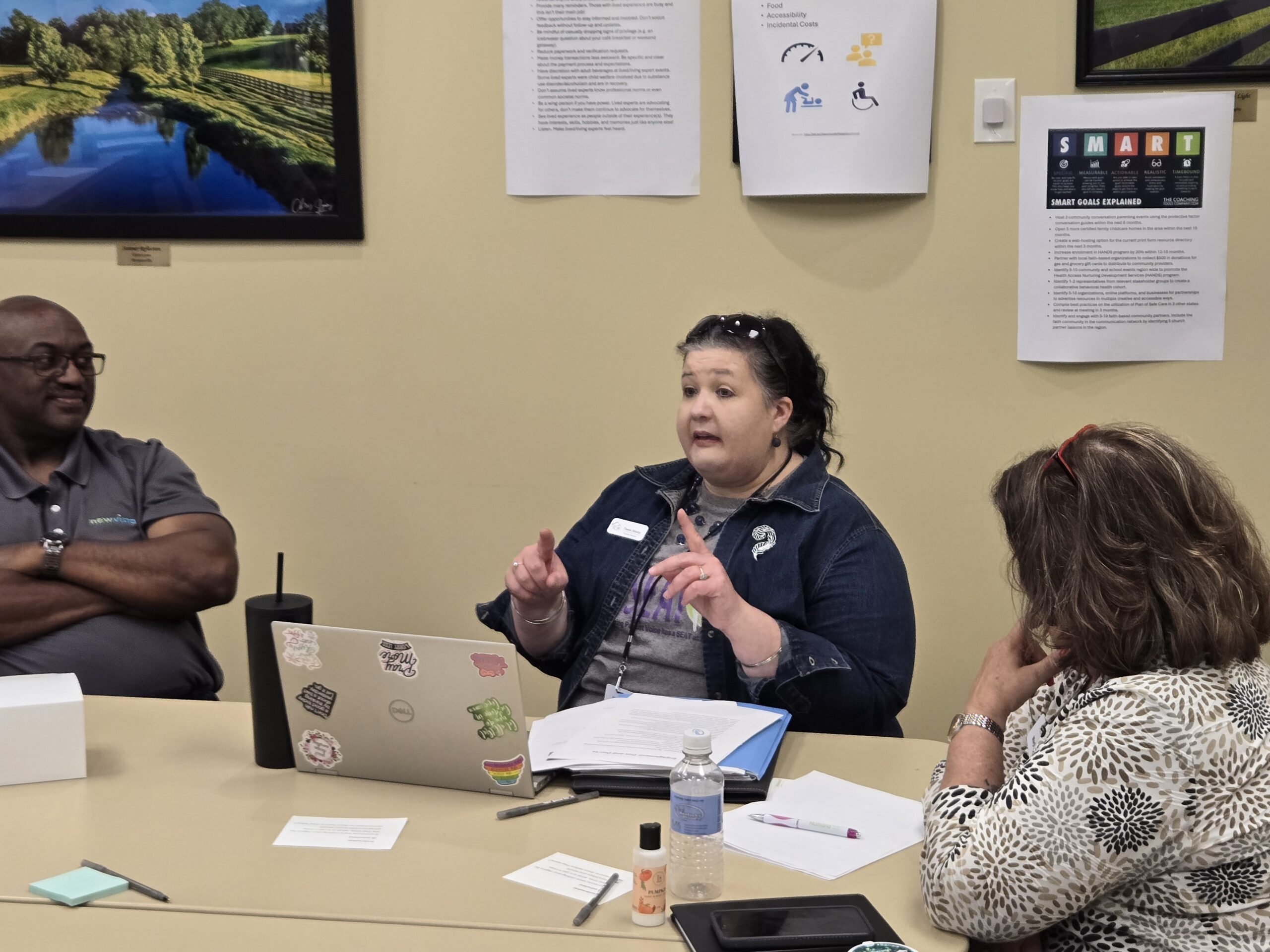 All of this has led me to the journey I have been on for the past two years—to use my prior CPS involvement to advocate for parents and families having a voice, a chance to be heard and be helped in a holistic approach.
Removing a child from a home or an alleged unsafe situation is just a temporary band-aid; it does not fix the root of the problem. The best way to help a child and show them that you care is to care about their parents. Approach them as a unit because that is what they are.
Back to the main question: Is there a way for CPS to help the whole family and address the problem that caused the alleged “unsafe” or “crisis situation” that required their involvement in the first place?
Alternative Response Implementation in Kentucky
Fortunately for the families here in Kentucky, we now have a new way of helping. Alternative Response is focused on child safety while simultaneously approaching families in a more friendly and holistic way to address concerns and meet their needs.
Learn more about Alternative Response here.
 Kentucky has been making great strides and setting the standard across the nation for others in child welfare, being led by Department for Community Based Services Commissioner Lesa Dennis, into the future with a forward thinking, upstream-focused child welfare system.
As a Birth Parent Advocate, it has been a rewarding privilege to participate in this new Kentucky initiative, as it reshapes how the child welfare system supports individuals and builds community trust. What have I witnessed?
- Families and DCBS workers forging new bonds of trust and understanding that were never there before, and from these newfound relationships, families who previously avoided addressing issues until they were out of hand, now approaching problems collaboratively and proactively.
- DCBS staff engaging in critical thinking and partnering with families for the safety of children and minimizing any additional and unnecessary trauma.
- DCBS workers, who reported becoming stagnant and uninspired in their roles, experiencing a remarkable revitalization in their careers. They boast that they are able to perform the work they were trained for and passionate about, resulting in a newfound spark and enthusiasm for their jobs.
- An approach that is working to cultivate productive and healthy family units that sets the stage for a more harmonious and supportive future. I liken it to tending a garden: the care and effort being invested can blossom into a flourishing environment of emotional well-being and mutual support.
Learning from the Past to Improve in the Future
While I can’t say for certain that having Alternative Response available during my CPS case would have prevented my son’s removal, I strongly believe that it might have led to a different outcome, potentially keeping our family together. At the very least the trauma we have endured would not have been nearly as significant.
In conclusion, I’d like to share the experiences and insights I’ve gained through participating in the implementation of Alternative Response and leave you with a few thoughts to ponder. Life can be unpredictable, and we’re all just one critical incident away from needing a helping hand. It could be a life-changing illness, an unforeseen accident, the loss of an income source, a natural disaster, or the passing of a loved one. In these moments, it’s important to remember the value of empathy and support for one another.
Our shared vulnerabilities connect us and remind us to be there for each other when times are tough. I ask you how you would want your children and your family to be treated if you were the ones involved with CPS.
Theda Simpson-Mosby is a Lived Expert and a member of KY SEAT and the Kentucky Alternative Response Implementation Team


That was great. Keep putting the word out.
Thank you for sharing your story, fighting and voicing for advocacy!
You are doing a great job Theda .