
 As we find ourselves in the midst of National Family Week, it’s a time to celebrate and reflect upon the importance of family (whether blood-related or chosen) and the role that family plays in our lives. Families come in all shapes and sizes, but one thing they all share is the potential to shape our futures.
In Chapter 6 of The Deepest Well: Healing the Long-Term Effects of Childhood Trauma and Adversity – “Lick Your Pups,” Dr. Nadine Burke Harris describes a study involving rat pups and their mothers, which sheds light on the profound impact of family and early experiences and how those experiences can impact our ability to cope with stress.
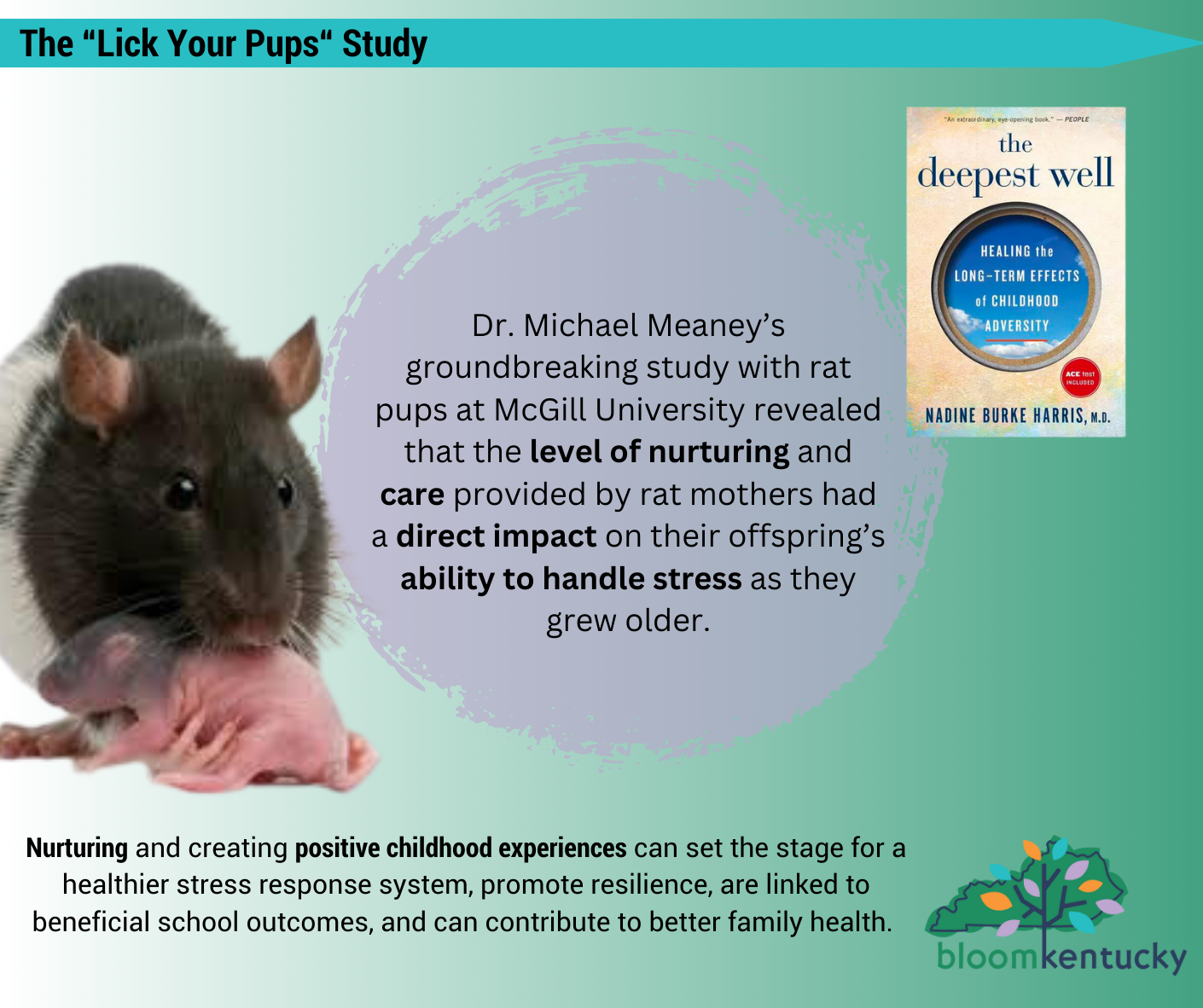 The “Lick your Pups” Study
Dr. Michael Meaney’s groundbreaking study with rat pups at McGill University revealed that the level of nurturing and care provided by rat mothers had a direct impact on their offspring’s ability to handle stress as they grew older.
Much like how nurturing and loving parenting can make humans more resilient, baby rats raised by mothers who exhibited high levels of nurturing and grooming displayed better stress-coping abilities in adulthood.
But what’s the biology behind this phenomenon?
The Role of Epigenetics
To understand this better, we need to dive into the world of epigenetics – the study of how your behaviors and environment can cause changes that affect the way your genes work. Our DNA acts as the basic blueprint for our biology, but on top of this genetic code, there are chemical markers known as epigenetic markers. Dr. Burke Harris encourages us to think of the genetic code as the notes on a sheet of music and the epigenetic markers as the notations that determine how those notes are played. These markers can even indicate when to skip a section of music altogether.
 Epigenetic markers, in essence, decide which parts of our DNA get activated and translated into proteins. They form a critical layer called the epigenome, sitting atop the genome, or the genetic code.
Still with me?
How Stress Alters the Epigenome
Here’s where the connection to stress and positive childhood experiences comes into play. When we experience stress or adversity in our environment, these epigenetic markers can change. This process can significantly affect how our bodies respond to stress. For instance, in children exposed to chronic stress due to Adverse Childhood Experiences, specific genes responsible for regulating the brain, immune system, and hormones in response to stress may get turned on or off.
These epigenetic changes can persist unless there’s some intervention. They can lead to lasting impacts on a child’s health and even increase the risk of various diseases later in life.
 Creating Positive Childhood Experiences
So, nurturing and creating positive childhood experiences can set the stage for a healthier stress response system, promote resilience, are linked to beneficial school outcomes, and can contribute to better family health.
Healthy Outcomes from Positive Experiences (HOPE) is an organization that is grounded in science and shares a variety of resources that works to foster positive experiences in families.
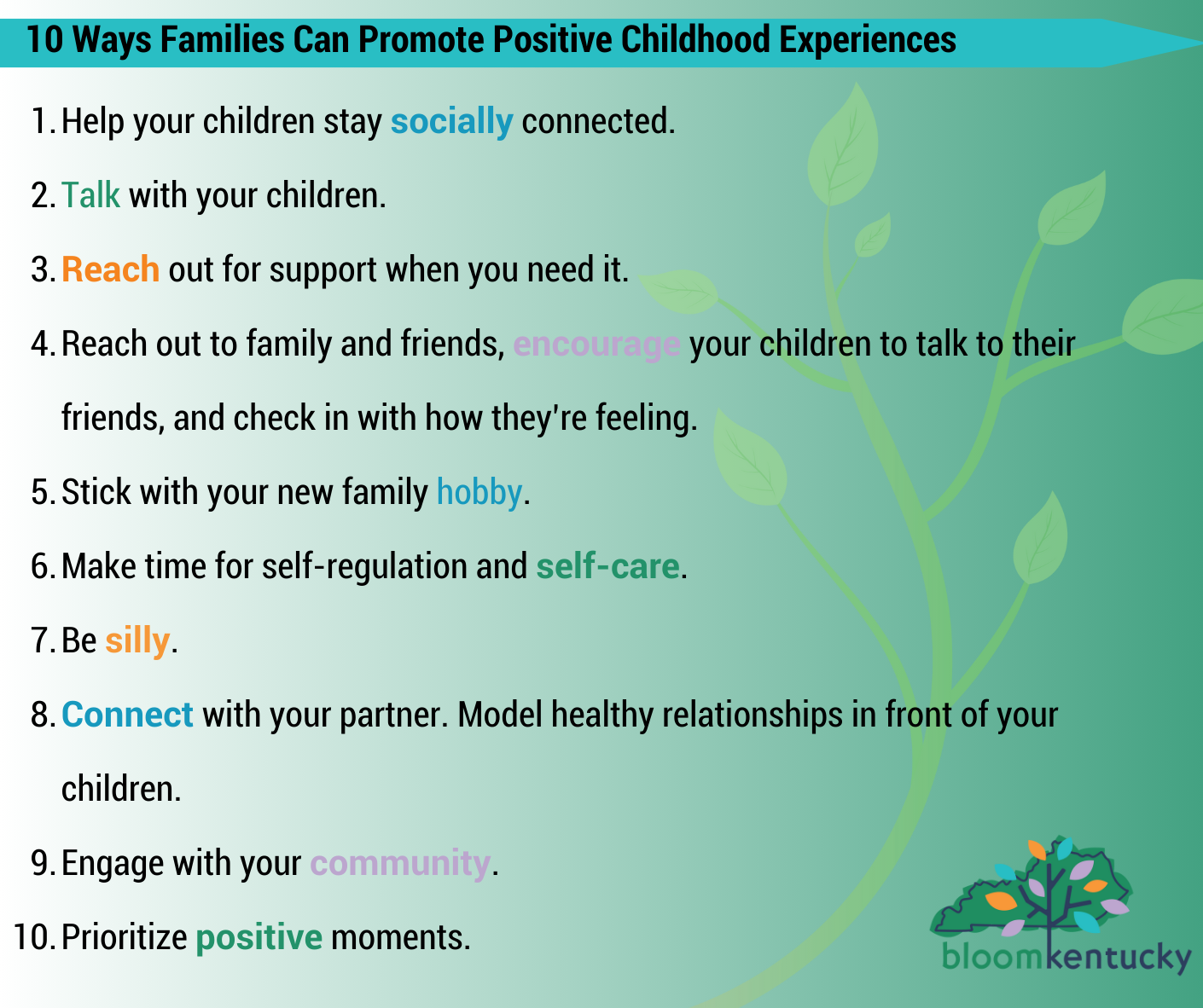
In one of their guides, they share 10 ways families can promote positive childhood experiences:
- Help your children stay socially connected.
- Talk with your children.
- Reach out for support when you need it.
- Reach out to family and friends, encourage your children to talk to their friends, and check in with how they’re feeling.
- Stick with your new family hobby.
- Make time for self-regulation and self-care.
- Be silly.
- Connect with your partner. Model healthy relationships in front of your children.
- Engage with your community.
- Prioritize positive moments.
Our partners at the Kosair for Kids Face It Movement share additional activity ideas for interacting with your baby and toddler or school age child.
The research shows that positive childhood experiences lead to better health and may offset the effects of early childhood adversity on adult health.
During National Family Week, it’s a perfect time to reflect on how you and your family are creating early positive experiences. On the policymaking side, it’s a perfect time to consider how policies shape families and their ability to create opportunities for positive childhood experiences.




Leave A Comment