
Co-authored by Kathleen Baldwin, Intern at Kentucky Youth Advocates
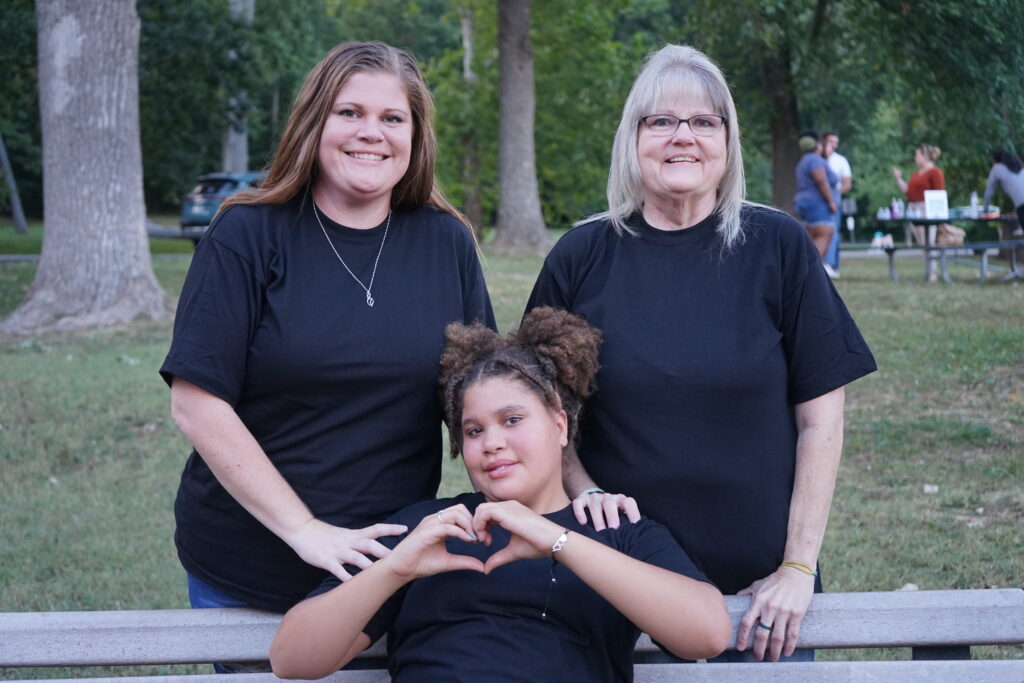 During the 2024 legislative session we saw some MAJOR wins for kinship families in Kentucky, which will be going into effect over the coming months. Research shows that placement with family members or a safe adult known to the child, rather than traditional foster care, can have lifelong benefits for a child and their family. Children placed in kinship settings have more placement stability, are less likely to to experience additional abuse, have better mental health outcomes, and have better education outcomes.
Our legislative, executive, and judicial branch leaders continue to demonstrate the importance of kinship care in the Commonwealth through needed statutory and regulatory changes, training of DCBS staff, and decision making in cases that come before Judges.
State budget investments in House Bill 6
Investments for relative caregiver placement and sustained investments in the critically important one-time Relative Placement Support Benefit (RPSB) creates an opportunity for the Department for Community Based Services (DCBS) to provide much needed supports to children and their families who are stepping up to take care of them. The investments also allow DCBS to provide support through a new Subsidized Permanent Custody (SPC) option (described below). Providing monthly stipends, similar to foster care, for relative and fictive kin care can help to stabilize placements and ensure caregivers have what they need to help children thrive.
What does it do?
Investments in relative and fictive kin placements demonstrate a commitment to do what’s best for children and families who are engaged in the child welfare system. Placement with relatives and fictive kin is what is the next most beneficial option for most children who cannot safely stay with their parents due to concerns of abuse and neglect. Raising children, especially when not planned for, can create short-term financial strains on caregivers, which could lead to a disruption in their placement or undue stressors on the family. Providing financial support and other supports for kinship placements through these state budget investments means more strong placement options for children and better supported kinship caregivers across the Commonwealth.
Why is it good for Kentucky’s kids?
Kids do better in homes that can meet all of their needs both physically and emotionally. Financial supports like the Relative Placement Support Benefit and relative caregiver payments can not only ensure kids have what they need in their new homes, like clothing, bedding, hygiene items, and food, but it can greatly reduce the stress that caregivers take on when bringing children into home.
Subsidized Permanent Custody
The Subsidized Permanent Custody (SPC) program provides financial and other support, similar to adoption assistance, that increases stability for children in the care of relatives and fictive kin. The goal of this program is to offer support for kinship caregivers in order to provide the child with an additional permanency option. In order to qualify for SPC, return to parent or adoption cannot be an appropriate permanency option for the child. Additionally, the kinship caregiver must not already have custody of the child. A SPC contract is different from adoption because it does not require termination of parental rights.
What does it do?
Similar to the adoption assistance program, the SPC program will provide subsidized monthly payments and Medicaid for kinship or fictive kin caregivers that have cared for a child for at least six months. SPC offers additional services, like child care and respite care, for some families.
Why is it good for Kentucky’s kids?
The SPC program hopes to keep more children with their kinship caregiver, rather than being placed with an unfamiliar foster family. Research shows the benefit of kinship care for children. Benefits of kinship care include more stability for the child, less trauma that the child experiences, the child having stronger connections to their family, culture, and community, and better behavioral and mental health outcomes for the child.
What’s going on with implementation?
The Subsidized Permanent Custody program launches on Monday July 1, 2024. If you have recently elected to become a kinship foster care provider for a relative or fictive kin care provider, you may be eligible for the SPC program after at least 6 months of caring for a child in foster care. If you are approached about a relative or fictive kin child being placed in your home as a result of abuse or neglect and you choose to become a kinship foster caregiver, you likely will be eligible for SPC upon signing a contract with the state.
For more information regarding the programs and/or to apply for the benefits, please contact your social worker or the kinship support hotline at (877) 565-5608 or via email relative.supports@ky.gov or go to the KY FACES website.
Senate Bill 151
Senate Bill 151 has been in the news of late due to a disagreement between the Legislature and the Executive Branch. SB 151, sponsored by Senator Julie Raque Adams and signed into law by Governor Beshear, closes a gap in access to additional supports by allowing a relative or fictive kin caregiver to apply within 120 days or upon a qualifying event to the Cabinet for Health and Family Services (CHFS) to be a relative or fictive kin foster home. It also allows the young people themselves a say in where they are placed upon removal from their home.
The implementation of this bill is still in question and we are following closely. We anticipate learning more on July 30th at the next Interim Joint Committee meeting on Families and Children.
What does it do?
SB 151 allows the time needed for relative and fictive kin caregivers to make an informed and important decision about how they want to provide care for a child who has come to the attention of the Department for Community Based Services (DCBS). When a potential kinship caregiver is identified they are given the opportunity to become a kinship foster parent or can choose to receive temporary custody of a child in a placement that is different from traditional foster care. This choice of placement type comes with decisions that impact a child and caregiver’s access to supports and services like foster care payments, including access to a new program called Subsidized Permanent Custody which is provided to a child until the age of 18 unless that placement ends.
Why is it good for Kentucky’s kids?
Making a decision that can impact a child until they reach adulthood is a big one to make and not something that should be rushed. Providing up to 120 days to learn about the options, talk it over with family and supportive professionals, and make a choice based on what is best for the child in their care can help reduce stress and stabilize the placement. Kentucky kids are going to be better off with caregivers who are informed about their options, and not rushed into making decisions that have long term consequences.
What’s going on with implementation?
The bill is supposed to be in effect on July 15, 2024. However, during the June Interim Joint Committee on Families and Children the committee learned from DCBS Commissioner Dennis that the Executive Branch was not planning to implement SB 151 due to not having committed funds in the budget. See a recent Op-Ed by Norma Hatfield, president of the Kinship Families Coalition of Kentucky, for a caregiver’s perspective.
New to the idea of kinship care? Consider checking out the following information from trusted resources.
What is a “Kin First” Approach?
A “kin first” approach is a course of action used when a child is being removed from their home due to abuse, neglect, or dependency. The idea of the kin first approach is to initially work to find fictive kin care/relative care for the child, rather than immediately placing the child in a foster home. Once all possible kinship care options have been exhausted, then a child can be placed in a foster home. Foster care placement is identified as the “exception” rather than the standard. Learn more from Casey Family Programs.
Some considerations of best practices in kinship care as we commit to kinship families include the following from Generations United:
- Training staff on kinship care topics so that kinship caregivers are adequately informed on all of their options/benefits.
- Adjusting the training for kinship caregivers to align more closely with kinship care topics versus non-kinship fostering.
- Allowing exceptions for kinship caregivers in regards to licensing (non-safety), which Kentucky has committed to.
- Finding ways to expedite background check processes for kinship caregivers.
- Creating non-kinship care as an “exception” that requires approval (kin-first culture).
 Kinship Families Coalition of Kentucky
The Coalition is a community group dedicated to raising awareness of the issues surrounding kinship care in Kentucky and forwarding recommendations for policy changes to increase supports for kinship families. Learn more at kinshipky.org.


Thanks to KYA for its sustained support for kinship families.
Iam a grandmother that has a daughter that is on drugs and alcohol she is in a program she left two of her kids with friends I went to Richmond to get them before the went to the state I work two full time job my husband can’t work do to his kidney shoulder surgery and hips rubbing together I went for help and they trun me down just need a little help