
We know substance use, among both adults and adolescents, continues to be an issue in communities throughout the Commonwealth.
To better understand just how substance use, as well as the opioid epidemic, are impacting Kentucky’s young people, Bloom Kentucky recently connected with high school students across the state to hear their perspectives on the impact of substance use among their peers and in their communities and how we might address substance use prevention.
We heard from 52 high school students from across the state who provided input via focus groups and survey responses based on their experience and the experiences of their peers as young people in Kentucky.
Vapes and e-cigarette usage were the most commonly reported issues regarding substance use among students’ peers. Students also reported the need for more support for families impacted by the opioid crisis. A student from Taylor County states:
“[We need] support for students whose parents use. Target both youth and parents because they are influencing use in their children or other students.”
Kentucky’s opioid crisis has and continues to have ripple effects on kids and families in our communities. Only three states–West Virginia, New Hampshire, and Vermont–have higher rates of children impacted by the opioid epidemic. We know that substance use and untreated mental health issues in the home, as well as parental incarceration, loss of a parent, and family violence often surround substance misuse in the home. Those adverse childhood experiences (ACEs) can have major impacts on both the short and long term health outcomes of young people in our community, especially if left untreated.
The bad news: ACEs, substance use, and the opioid epidemic are interconnected in ways that we likely do not even know the magnitude of just yet.
The good news: There are tangible solutions we can implement to help mitigate and prevent substance use among young people and ensure healthier outcomes later in life.
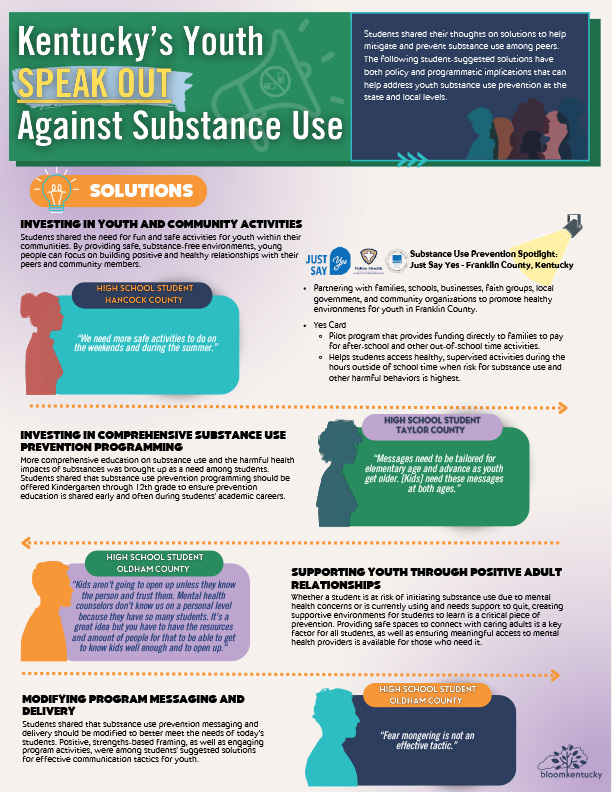
Students shared their thoughts on solutions that have both policy and programmatic implications to help address youth substance use prevention at the state and local levels.
Student-suggested solutions included:
- Investing in youth and community-based activities
- Investing in comprehensive substance use prevention programming for students of all ages
- Modifying program messaging and delivery to include strengthens-based framing
- Supporting youth through positive adult relationships
We can certainly learn a great deal from our young people when it comes to what they need to thrive and succeed. As a student from McLean County shares, “Getting people to stop [substance usage] can be done, it’s just going to take a lot of work. It’s going to take a lot of encouragement and consistency.”
Check out the full report of findings in Kentucky’s Youth Speak Out Against Substance Use.
We would like to thank our student participants for sharing their insights on youth substance use and substance use prevention. A special ‘thank you’ to the Foundation for a Healthy Kentucky for their support in this project.




Leave A Comment