
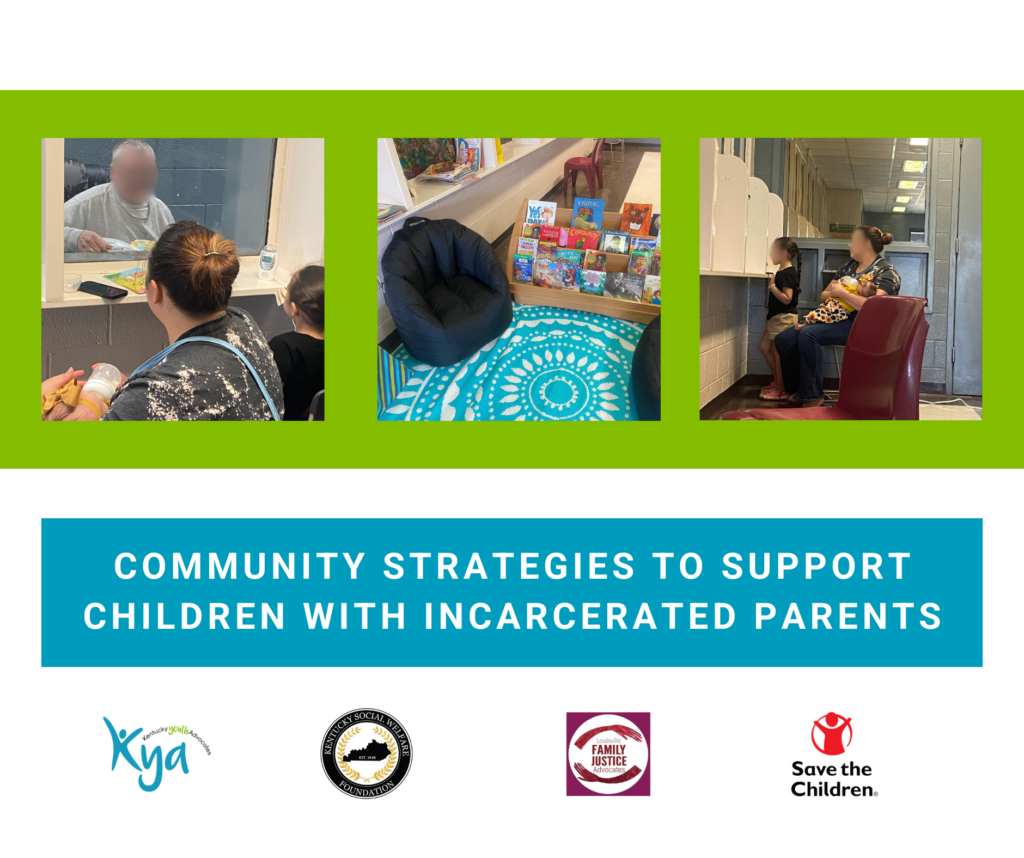
 When a parent is incarcerated, children often feel the impact on their lives in many ways. Families might lose income and have a harder time making ends meet. Children will not see their parent as often, or be able to connect with them in the same ways.
On a recent webinar, “Community Strategies to Support Children with Incarcerated Parents,” participants heard from a panel of people who personally experienced the separation caused by incarceration, either as the parent or as the child. While the panelists’ experiences were different based on where they lived and the situation, one common theme was that the connection between children and parents continued after incarceration, and staying connected was meaningful.
The role of the social worker was lifted up as especially critical when working with a family with a parent incarcerated. Shermeka Wallace with Louisville Family Justice Advocates (LFJA) described how decisions in the child welfare system can directly impact family connection. When the child must be placed with someone other than parents, parental rights to visit a child can be complex. For example, court orders might unintentionally prevent a visit from occurring with an incarcerated parent, if certain locations are required for visits. Planning for children to return to parents is another important component.
Partners from Louisville Family Justice Advocates also highlighted research on how to support children dealing with toxic stress. Those principles and how they apply to visiting include:
- Support responsive relationships: support quality visits and communication.
- Strengthen core skills: include reading and artmaking in visiting programs.
- Reduce sources of stress: provide a safe and calm space for visiting.
Additionally, Judith Jennings with LFJA shared action steps that community members can take to understand and enhance visiting programs locally. The guide they published, “Keeping Connected: Guide to Jail Visiting in KY,” outlines the steps to understand current visiting practices, engage fellow community members, and work to improve visiting. For interested communities, LFJA, Kentucky Youth Advocates, and other partners will be co-hosting an in-person training in May to learn more about those steps and how to implement them.
The full webinar can be viewed here.
Special thank you to the Kentucky Social Welfare Foundation for making the webinar possible.
Other resources:
- Talking about Toxic Stress: A Communications Toolkit — Harvard University
- Keeping Connected: Guide to Jail Visiting in KY — Louisville Family Justice Advocates
- Community and Jail Practices Supporting Children with Incarcerated Parents: The Kentucky Landscape — Kentucky Youth Advocates
- Guide for Supporting Children who have a Parent Incarcerated: Tips, Resources, and Conversation Starters — Kentucky Youth Advocates




Leave A Comment