
By Ashley Hoffman and Hannah Edelen
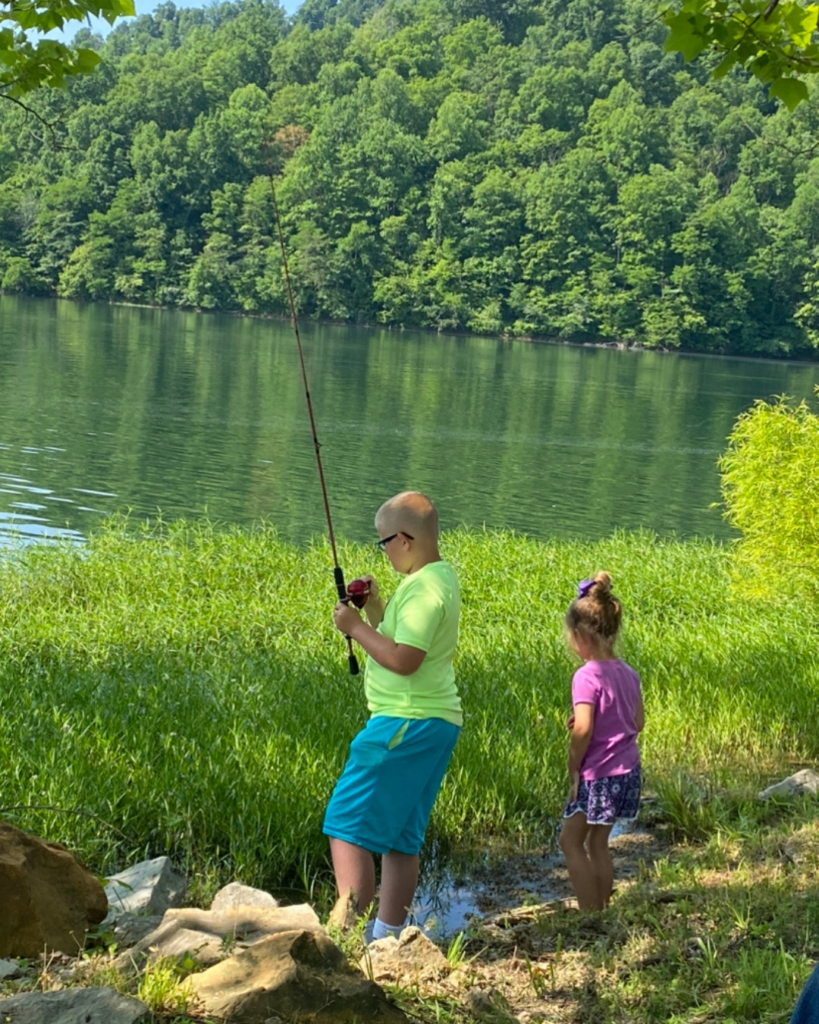
With summer in full swing, it’s a great time to consider how we want our children to spend their time.
Today’s young people are spending more time in front of screens than any previous generation. Some research suggests children now spend more than a quarter of their waking hours engaged with digital media and less than 1% of their time outdoors. That is a dramatic shift from the childhood experiences of every previous generation, and we are just beginning to figure out the full implications for child development, mental health, and overall well-being.
What we do know is concerning.
Emerging research suggests excessive screen time, particularly for young children, is associated with altered physical structure and function of the brain. Excessive screen time affects attention, executive function, language development, and emotional regulation. For adolescents, high levels of screen use are replacing activities that support healthy development, including physical activity, in-person socializing, creativity, and sleep.
A Focus in FrankfortDuring the July 6th Interim Joint Committee on Education, state Representatives and Senators discussed implications of screen time with testimony from Dr. Jared Horvath, author of The Digital Delusion, Emily Cherkin, the ScreenTime Consultant LCC, and Dr. Brian Creasman, Superintendent of Fleming County Public Schools. Speakers discussed implications of screen time on cognitive development, provided recommendations on mitigating impacts of tech overuse, and shared examples of how one school is working on limiting screen time. Advocates with Bloom Kentucky are focused on opportunities that promote positive youth development and will be working to advance policy during the 2027 state legislative session that is aligned with emerging research around screen time in schools. |
At the same time, youth mental health challenges continue to rise.
While no single factor explains this trend, growing evidence points to a relationship between excessive screen use and increased rates of anxiety, depression, loneliness, and low self-esteem among children and teens. This doesn’t even begin to address the risks of what children are accessing online, such as social media, explicit content, and online predators.
But the issue is bigger than screens alone.
Children in today’s world have fewer opportunities for unstructured play than previous generations. Busy schedules, safety concerns, changing communities, and limited access to natural spaces have all contributed to this decline, but the result is the same: fewer opportunities for children to explore, take healthy risks, solve problems independently, and build confidence through real-world experiences.
Risk is an inherent part of childhood development. When children play, they are constantly learning. They are assessing situations, making decisions, testing boundaries, and developing resilience. These experiences help children understand both their capabilities and their limitations in ways that cannot be replicated through a screen.
So how do we counteract these trends?
The answer is simple: green time.
Green time, or spending time outdoors in nature, is proven to counteract all of these negative effects. Research consistently links time spent outdoors with lower levels of stress and anxiety, improved attention, increased physical activity, stronger social skills, and greater overall well-being.
Nature also helps children develop qualities that policymakers, educators, and employers consistently say are essential for future success: problem-solving, creativity, adaptability, confidence, and perseverance.
Children who regularly engage with the outdoors are more likely to develop a strong sense of self-efficacy—the belief that they can overcome challenges and achieve goals. They learn through experience, exploration, and discovery. They gain confidence by trying new things, making mistakes, and trying again.
Importantly, advocating for green time does not mean eliminating screens. Technology is an essential part of modern life, and digital literacy is an important skill for today’s workforce and society.
The key is to create a balance.
Just as we want children to develop digital literacy, we should also ensure they develop environmental literacy. The challenge for families, schools, and communities is creating opportunities for children to spend meaningful time outdoors alongside their time online.
- Communities can invest in parks, trails, green schools, outdoor learning spaces, environmental education programs, and safe places for children to play.
- Schools can incorporate outdoor learning opportunities throughout the year.
- Youth-serving organizations can prioritize nature-based programming and outdoor recreation.
- Parents can help by establishing reasonable screen time boundaries and creating opportunities for outdoor exploration.
Sometimes it means providing alternatives when children say they are bored. While the transition can be hard at first for children who are used to having free rein online, eventually, you will find the rewards are worth it. In reality, boredom is often the starting point for creativity, imagination, and self-directed learning.
The choices we make today will shape the next generation’s physical health, mental health, resilience, and connection to the world around them. If we want Kentucky children to thrive, we need to make green time as accessible and appealing as screen time.
The good news is the solution is just outside the door. And it’s worth the investment.
 At the Kentucky Association for Environmental Education (KAEE), we work every day to connect children, families, schools, and communities with meaningful outdoor learning opportunities. Through programs like Kentucky Green Schools, professional development for educators, and partnerships with schools, parks, nature centers, and community organizations across the Commonwealth, we are helping ensure that every child has opportunities to learn, play, and grow outdoors.
If you are an educator, parent, youth-serving organization, policymaker, or community leader interested in expanding outdoor learning opportunities in your community, we invite you to connect with us. Together, we can make green time a priority for Kentucky’s children and create healthier, more resilient communities for future generations.
Ashley Hoffman is the Executive Director of KAEE. Learn more about KAEE’s programs and resources at kaee.org.





Leave A Comment