
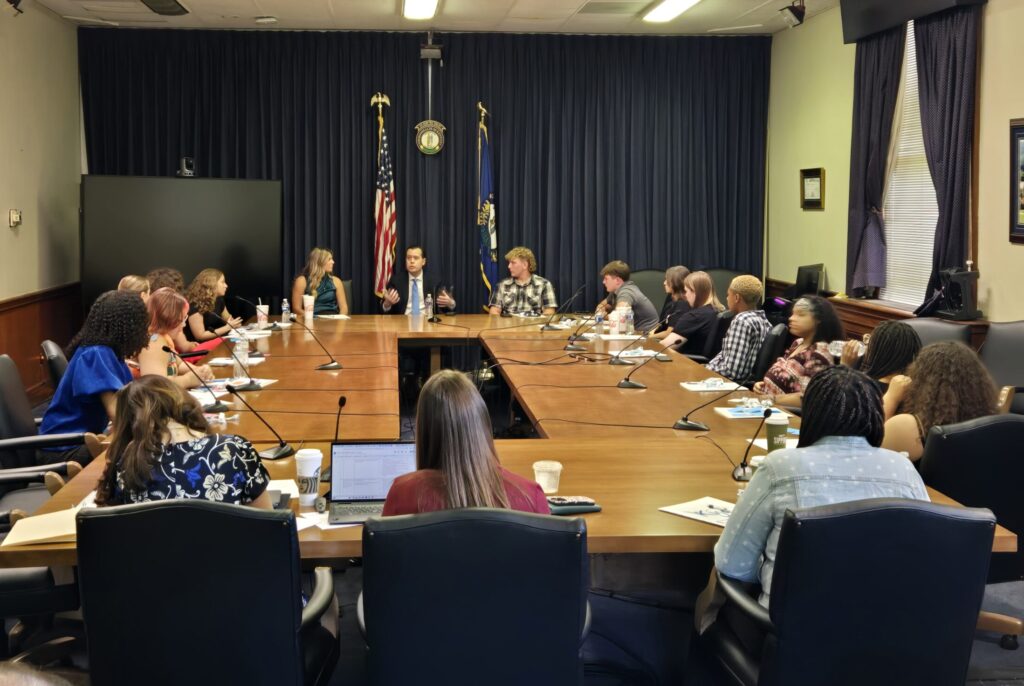
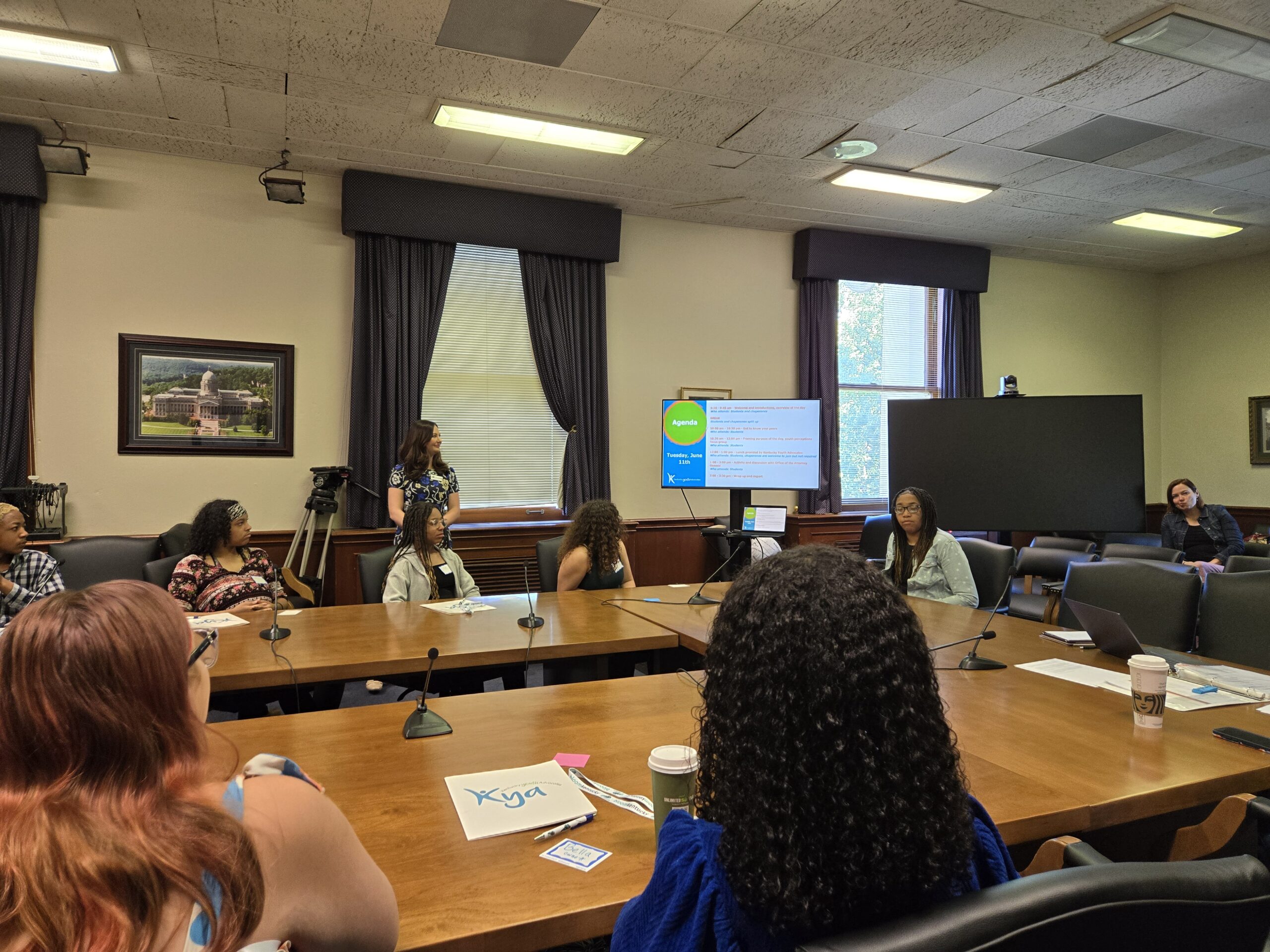
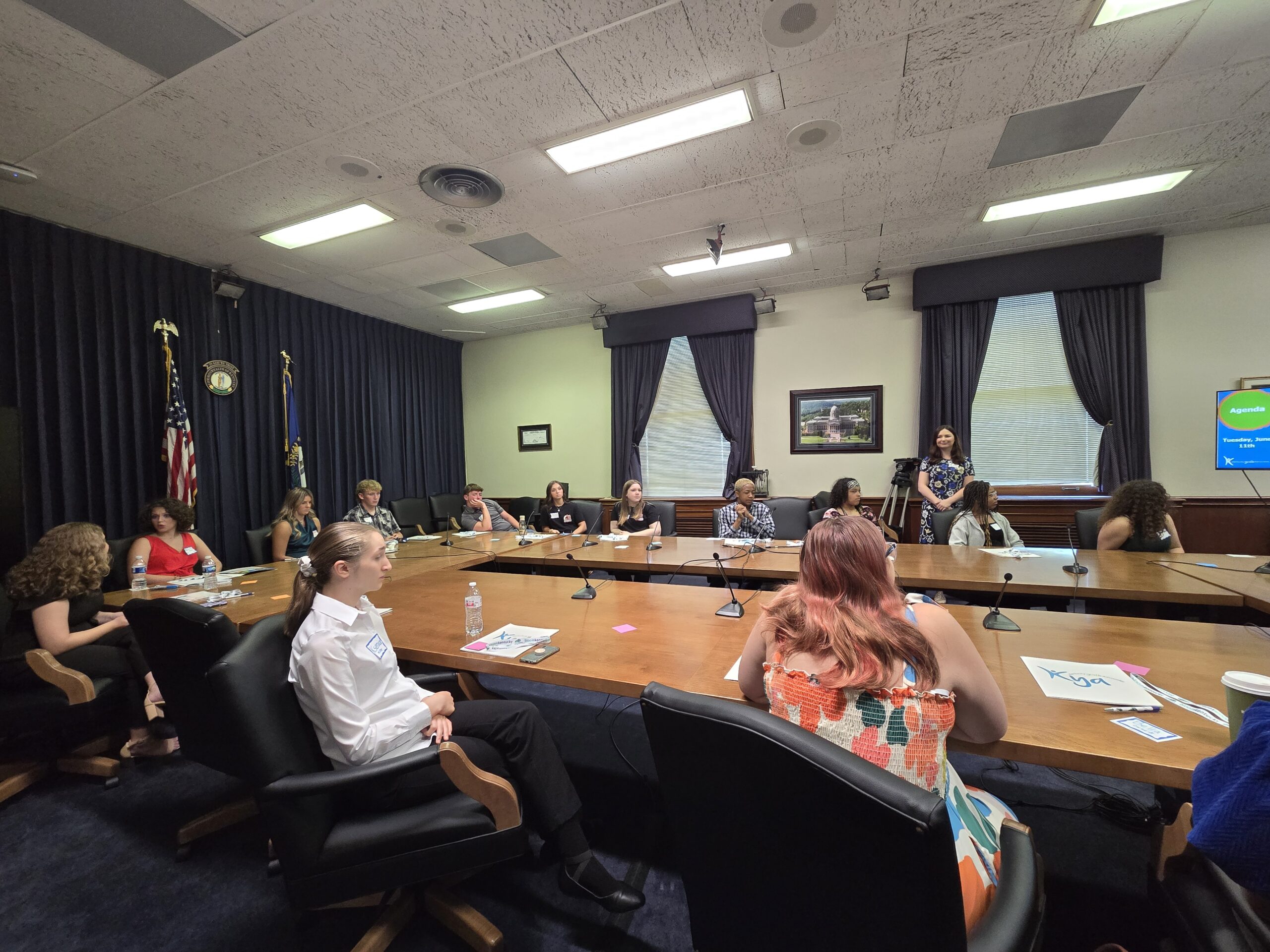
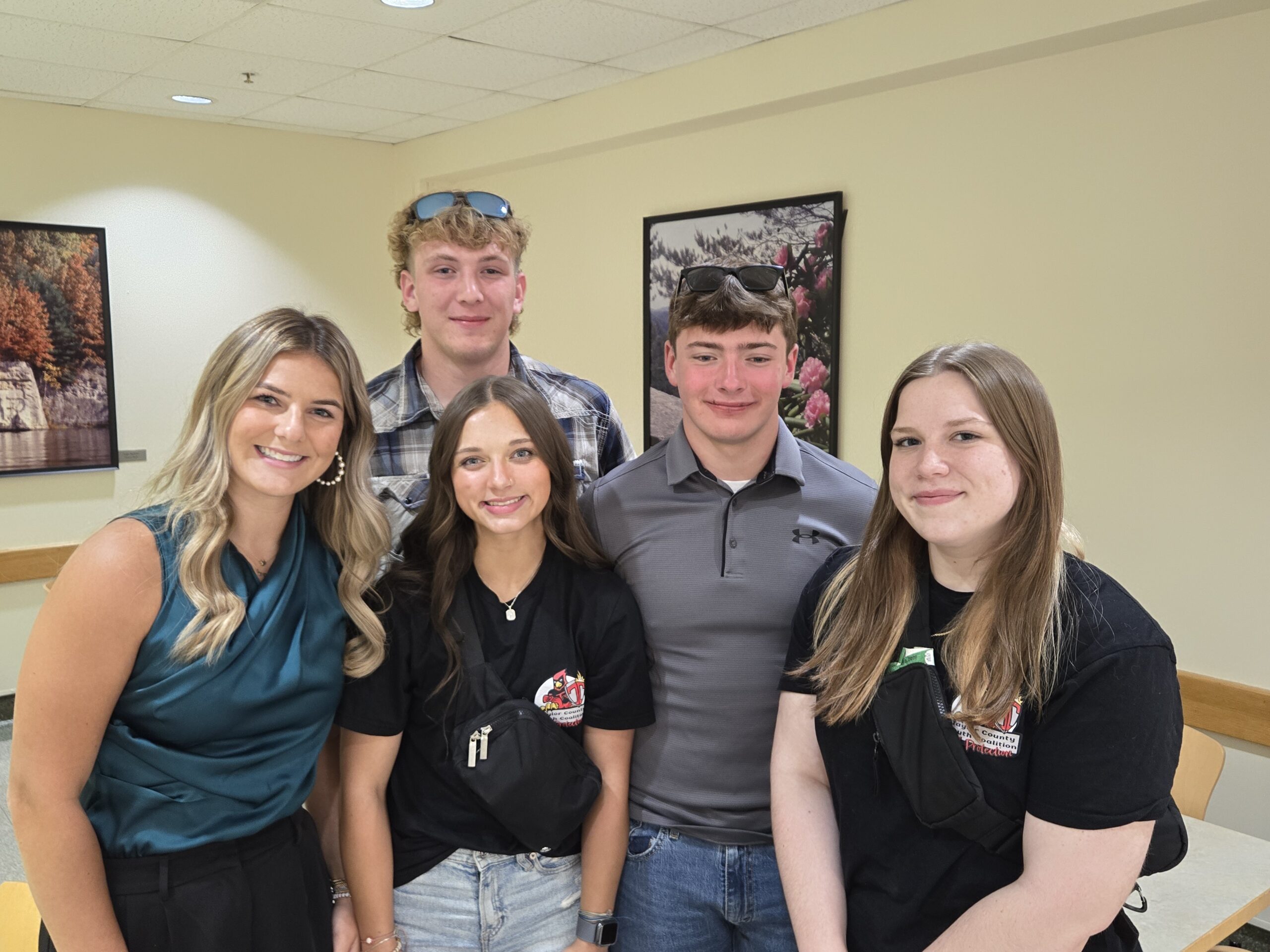
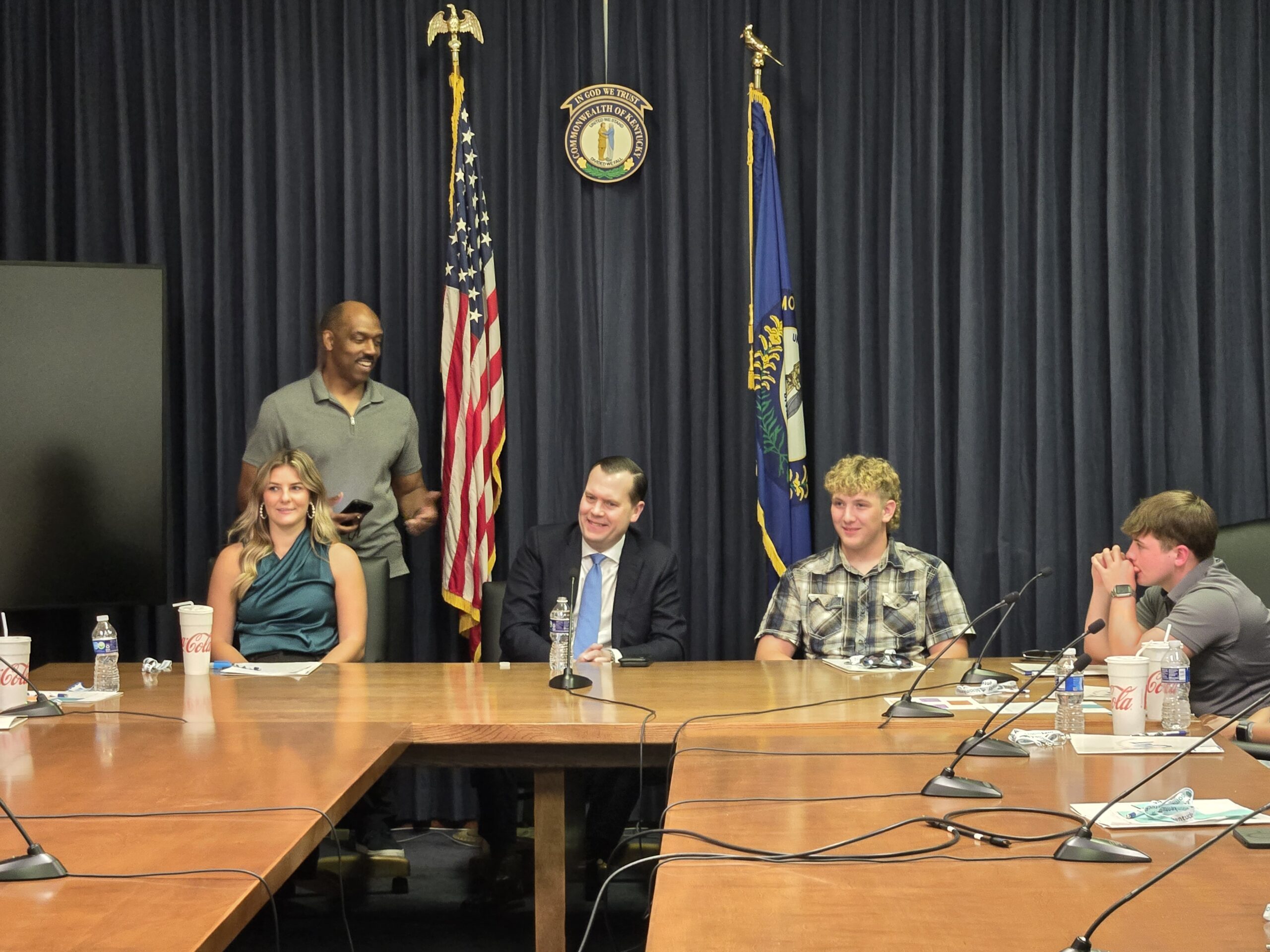
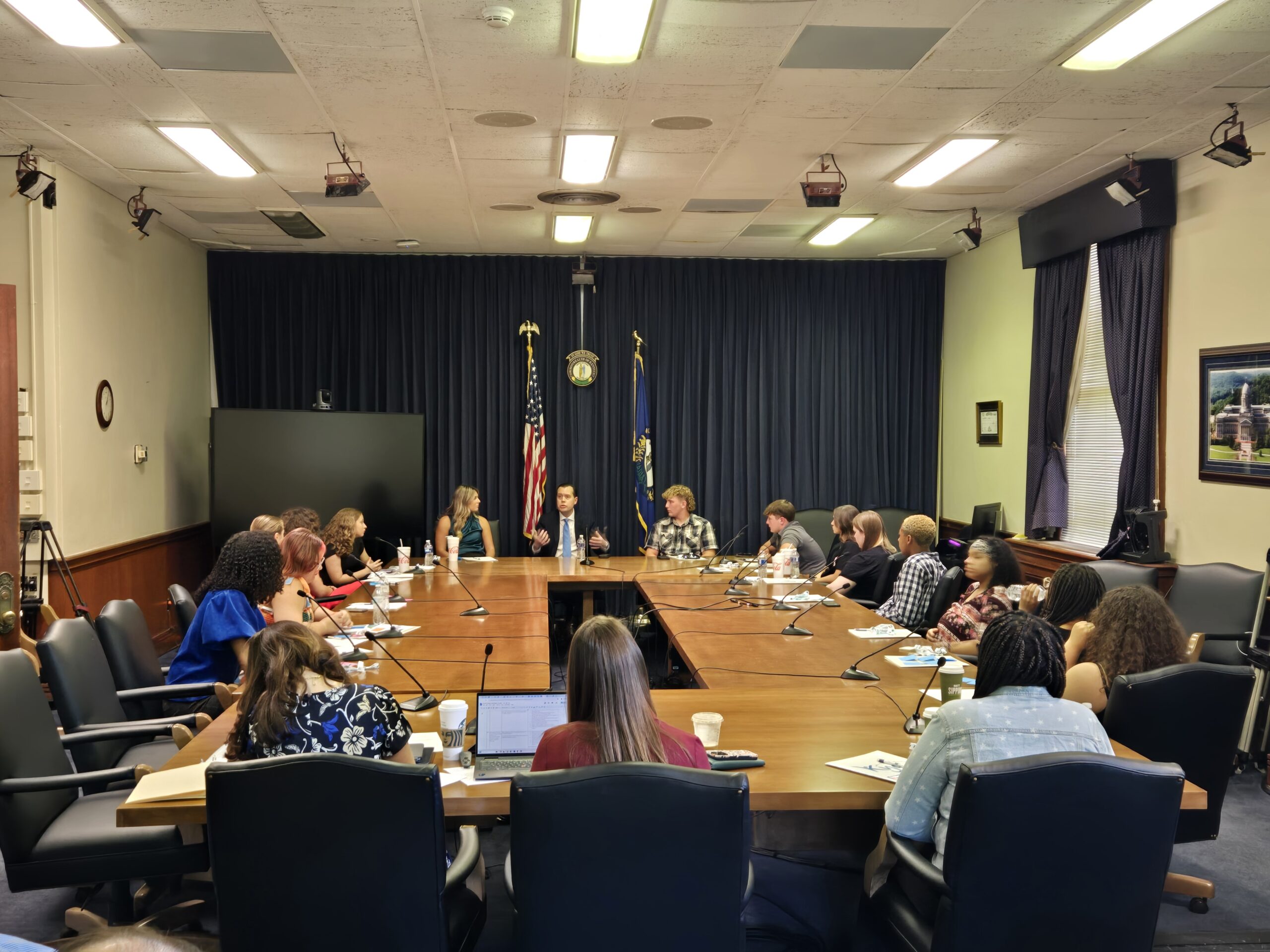
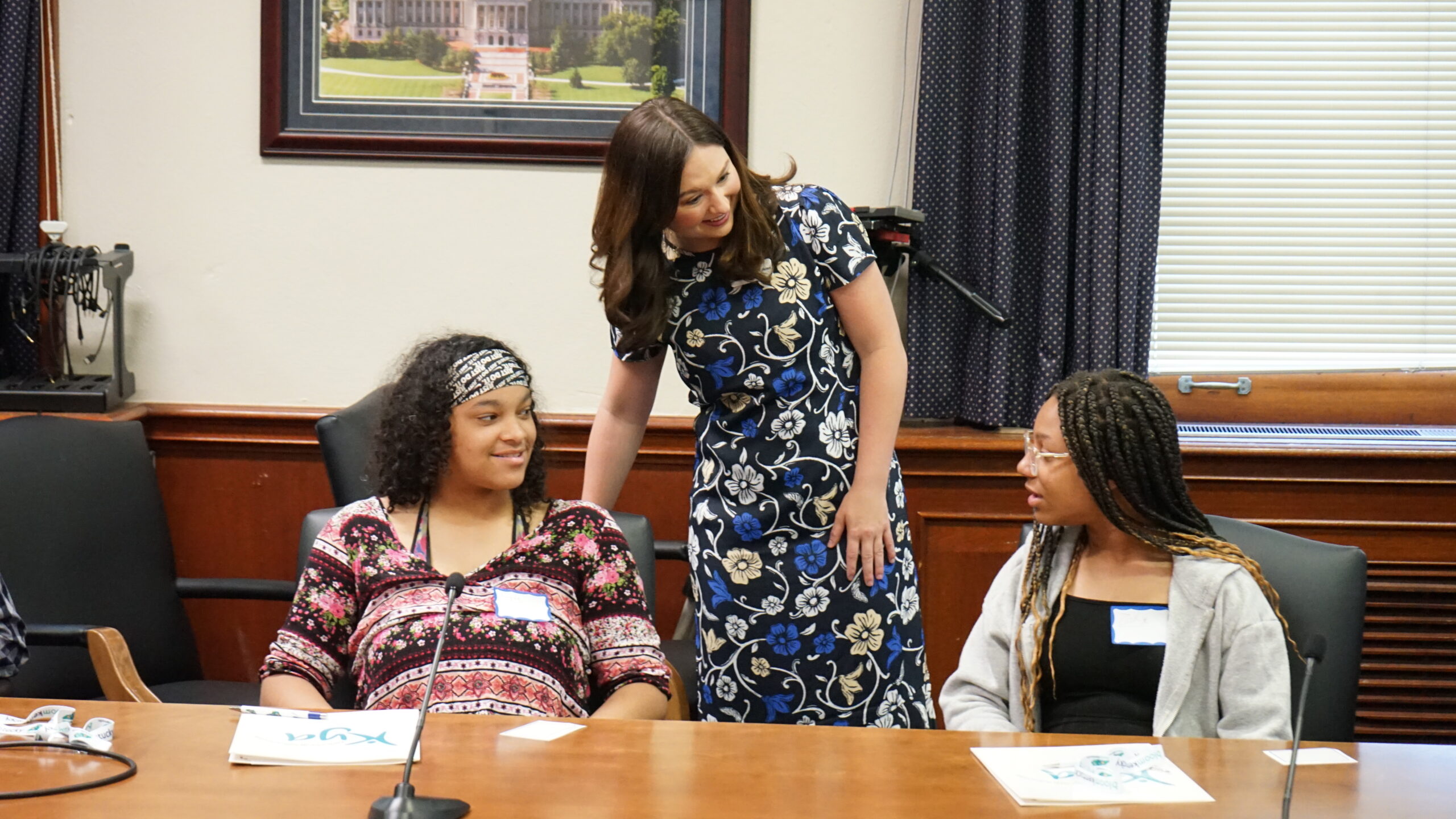
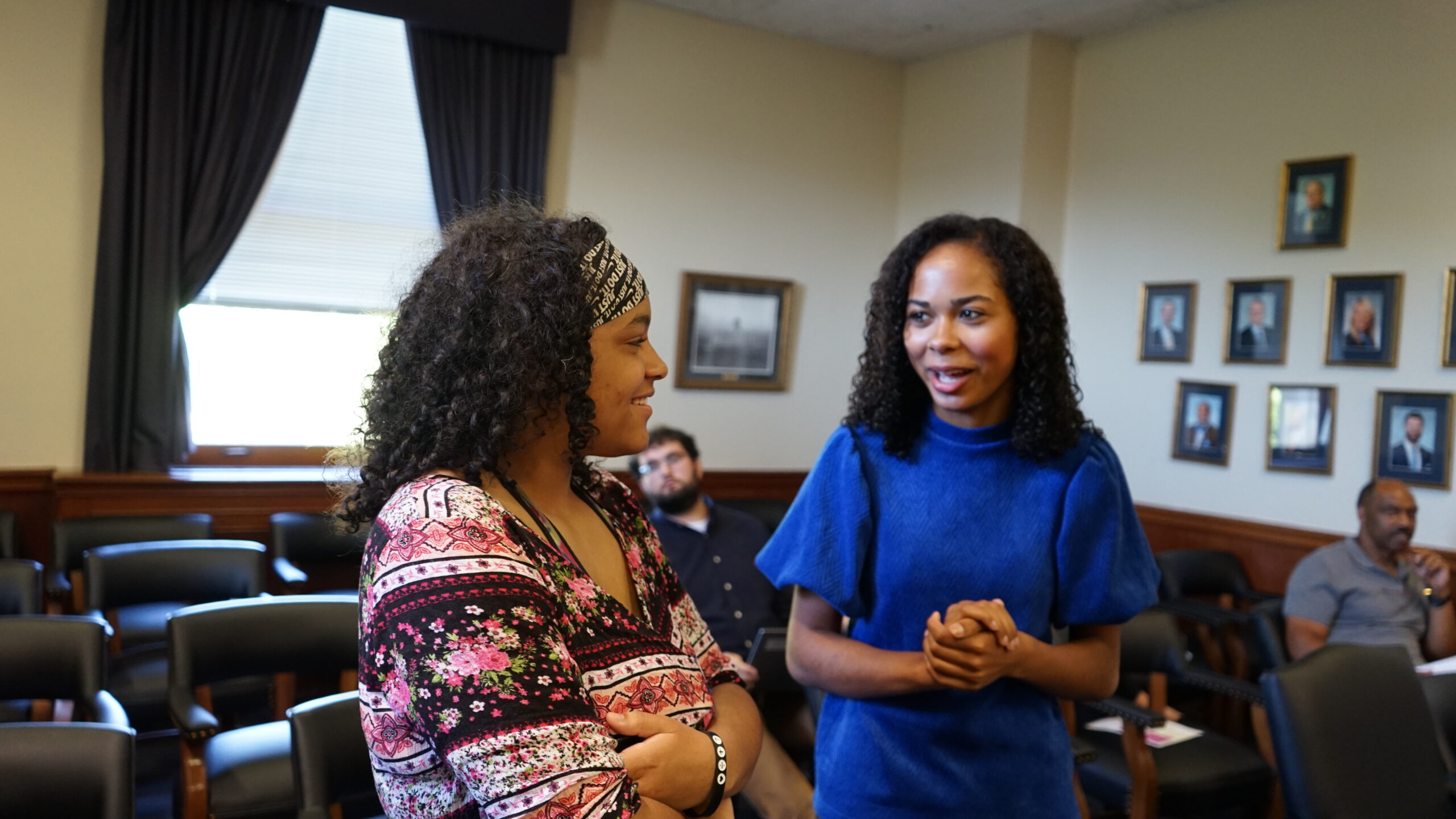
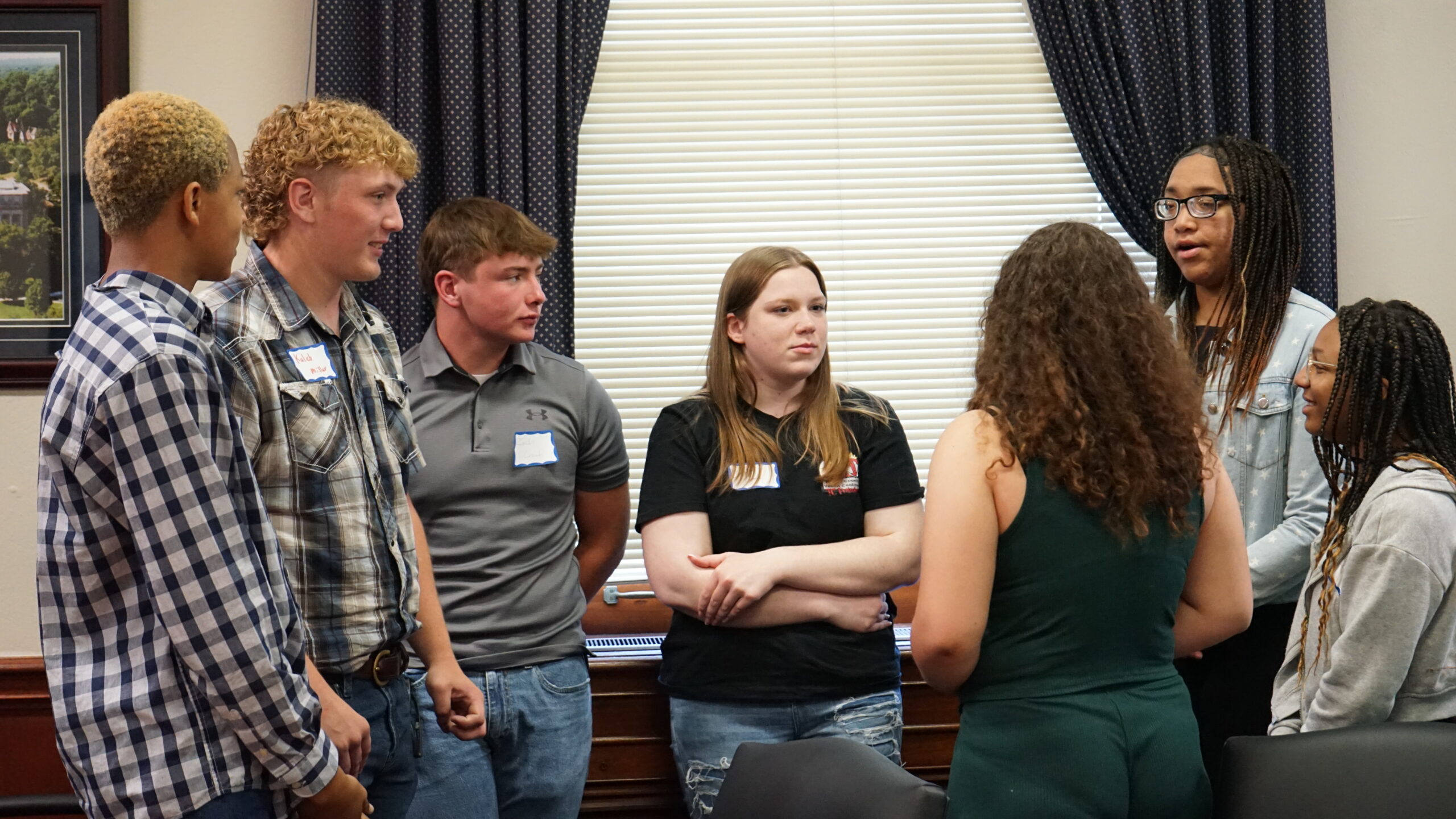
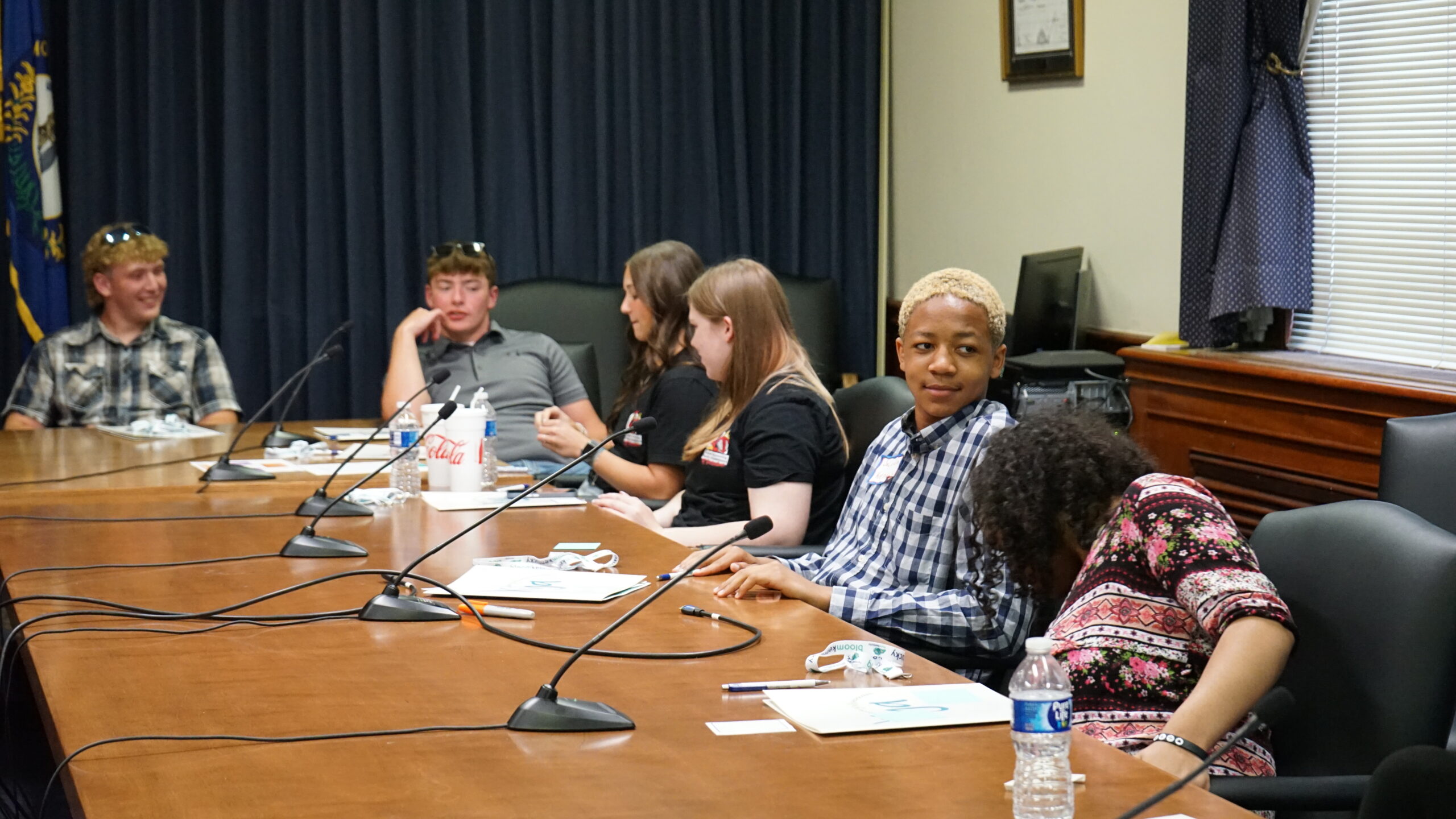
 As Bloom Kentucky continues to look for ways to improve and expand opioid prevention efforts across the state, we recently partnered with the Kentucky Office of the Attorney General (KYOAG) so that Attorney General Russell Coleman and leaders of the Opioid Abatement Advisory Commission could hear from students directly. In the halls of the State Capitol, 15 students from six counties in every corner of the state convened to provide valuable insights and bring a young person’s perspective to the conversation.
Students were able to meet peers from across the Commonwealth and learn more about the opioid crisis in Kentucky, as well as the opioid settlement dollars coming into the state to mitigate this epidemic. With a better understanding of the opportunity to make an impact in Kentucky communities, youth participants reflected on what opioid use looks like in their community, school, or family and why they think their peers turn to drug use. We heard about the current prevention programming they are being offered in their schools – some noting that they couldn’t remember any specific focus on substance use prevention.
Although students were familiar with the opioid crisis and had some understanding of the impact it has had on their communities, the overwhelming narrative was on teen vaping. Students shared their experiences watching their peers struggle with nicotine addiction and escalating to using other substances. We heard about students having easy access to vape products – containing both nicotine and other substances – through local retailers and peers. The root causes that have led many youth to try these products largely include poor mental health or difficulties in their personal lives, as well as pressure to fit in with their peers.
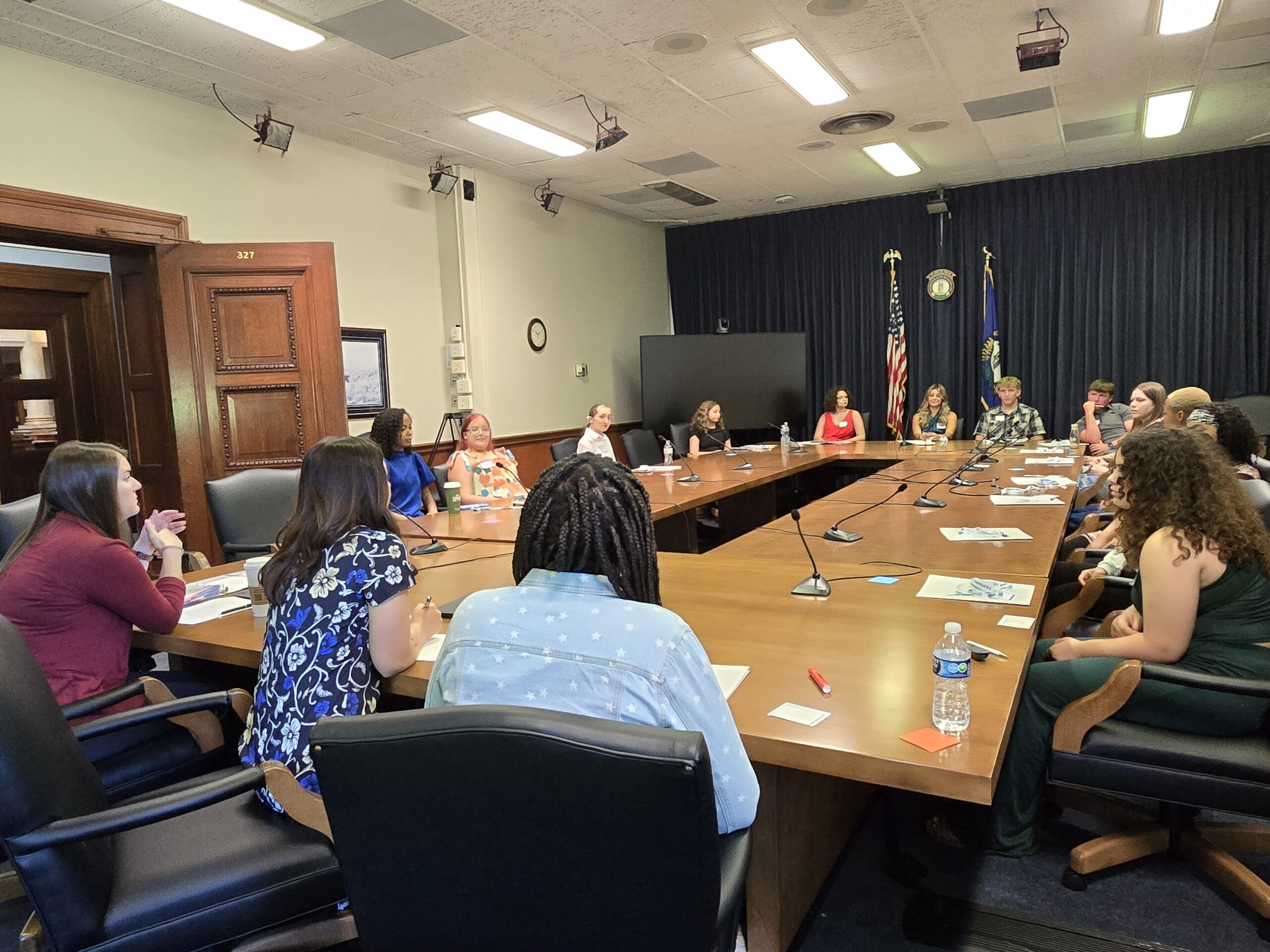
As the discussion shifted toward solutions, students learned about the HOPE Framework – Healthy Outcomes From Positive Experiences – and how positive childhood experiences have a buffering impact on adult substance use behaviors, specifically cigarette, alcohol, and illicit substance use. Using the Four Building Blocks of HOPE, students engaged in an activity to develop ideas related to prevention that they would like to see take place in their school or community.

Some of those ideas included:
- Increasing access to mental health counselors
- Creating greater accountability for retailers who are contributing to the environment
- Building facilities for youth engagement opportunities and a place for the community to connect
- Providing opportunities during the school day to connect
Youth were encouraged to continue to brainstorm solutions for their community and take action by communicating those ideas with their local elected officials.
Youth participant, Ksenia Miller from Kenton County, said:
“It was so wonderful to not only meet Mr. Coleman at this event, but to also connect and collaborate with peers from all across the state. It was incredible to work with everyone and put together our perspectives, experiences, and ideas to work toward creating a safer Kentucky.”



Leave A Comment