
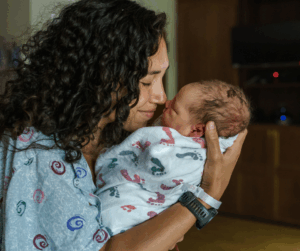
 Kentucky continues to face rates of child maltreatment that are nearly double the national average. Infants are at the greatest risk, making up 1 in 8 victims, making the first year of life a crucial period for prevention.
Policies that give parents stability during this window can make a clear difference. The first year with a newborn is both exciting and stressful. Paid family medical leave offers parents time to bond with their newborns and meet basic needs without the added strain of lost income. Families without access to paid leave often return to work within weeks of a child’s birth, stretching already thin resources and further increasing stress, which has consistently been shown to heighten the risk of neglect and abuse.
What the Research Shows
In states with paid leave policies, research shows clear reductions in infant maltreatment including:
- Reports of infant maltreatment declining by 14%
- Substantiated cases of abuse and neglect declining by 22%
- Infant removals from the home being cut nearly in half (46%)
The benefits were strongest for families facing the greatest challenges with households living in poverty seeing the largest reductions in maltreatment. Paid leave also helped strengthen parental mental health, improved bonding with infants, and created greater family stability.
Why this Matters for Kentucky
For Kentucky, paid family medical leave should be viewed as more than just a workplace benefit, but as a proven prevention strategy. In addition to supporting families during a critical period of child development, expanding access could reduce the number of children entering the child welfare system and ease the financial burden that the system puts on our state agencies.
In December 2024, Governor Beshear filed an executive order that created paid family medical leave for executive branch employees in the Commonwealth. This was a huge step forward for Kentucky as the first paid leave benefit of this magnitude offered to state employees. Under the order, each executive branch employee would have access to six weeks of paid leave for a significant medical illness or to welcome a new child, either biologically or through adoption.
Although this is a welcomed step to help support infants and their families, there are still parts of this new policy that should be examined. The current policy only allows parents to take advantage of this leave every ten years, limiting the support available as families welcome new children, often at intervals shorter than ten years.
As lawmakers begin to examine the political landscape of the upcoming 2026 legislative session, it is important to remember the benefits that paid family medical leave can bring to the Commonwealth if more families have access to it. Make sure that your local legislators know that you value paid family medical leave and other policies that can support young children and their families.
Photo courtesy of Fly View Productions



Leave A Comment