
By Valencia Dickerson and Leila Salisbury
 “Define your grief?” That is one of the first questions I asked young people who walk through my door looking for a safe place to land their emotions and feelings when experiencing a death.
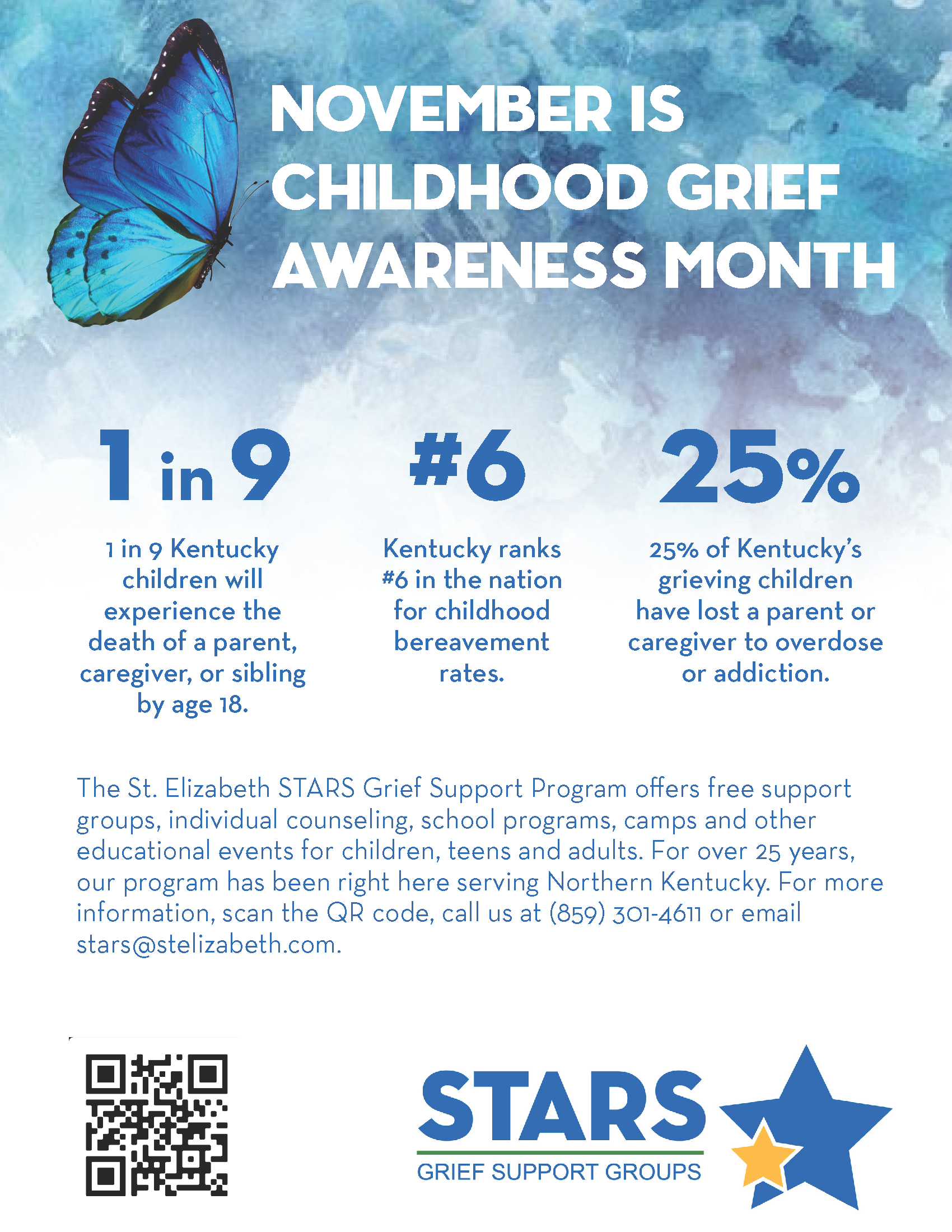
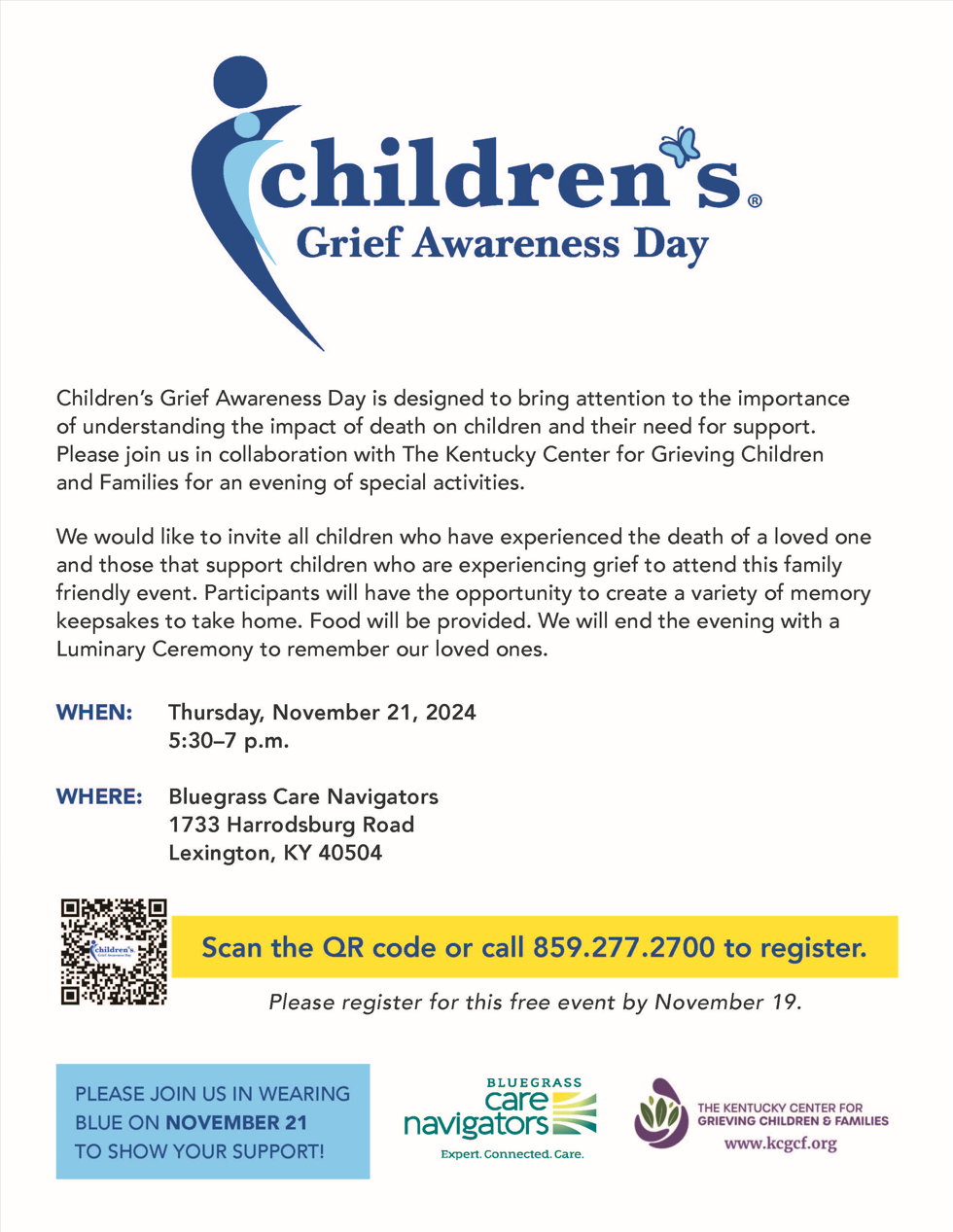
November is National Children’s Grief Awareness Month and November 21st is Children’s Grief Awareness Day, a time during which grief support centers, schools, therapists, and other professionals can advocate and spread the word that YES, children (even toddlers and preschoolers) grieve too.
The Handbook of Childhood Death and Bereavement tells us that adults often believe that children process and handle their grief like adults. Or, even more commonly, they assume that a child is not affected by a death and that they don’t experience grief at all due to their young age.
Yet, Living with Grief: Children and Adolescents says children have far more awareness of their surroundings than adults give them credit for, and their grief responses often fall into the category of disenfranchised grief – grief that is not recognized or validated. Children are so perceptive that when they do bring up the emotions around their grief, the uncomfortable or unapproving responses they get from peers, other adults, and even close family send the unintentional signal that this grief is something to be ashamed of, to be kept hidden.
Children and teens spend so much time masking their grief, often as a way to protect their parents and caregivers from the emotions they fear will make their family even more sad or upset.
What does grief look like in children?
Like adult grief, children’s grief can look like a variety of things, ranging from a nonresponse to obvious risk taking behaviors such as substance use or violence. It can also take the form of sleep disruptions, inability to focus in the classroom, high levels of anxiety because the child is worried that someone else close to them will die, or recurring stomach aches or headaches. But unlike adults, children will re-grieve a loss at each developmental stage and milestone.
Research shows that this places those younger children with loss at an even higher level of risk because they reprocess their loss so many more times over the course of their development.
Why should we be concerned about this?
In the Commonwealth, 11% of children will be parentally or sibling bereaved by the age of 18 – which is 1 in 9 of our young people. 17% of Kentucky youth will experience the death of a parent by the age of 25, with 25% of those deaths being substance-use related.
Reflect on these numbers and ask yourself how this connects with your own personal or professional experiences with children you know, raise, or serve.
How can we better support grieving children?
Since grief impacts so many youth in Kentucky, it is critical to know how to provide safe and supportive spaces for youth who experience a death. Whatever your role in a child’s life, whether teacher, counselor, coach, uncle or parent, your ability to listen in a nonjudgmental way can have a huge impact on these children’s lives.
- Validate their emotions – there may be a lot of them, and sometimes not the ones you expect.
- Be consistent in your expectations and in your ongoing connection with them.
- As children navigate their new normal and adjust to the reality of their loss, provide safe and healthy options for them to cope and express themselves through creative experiences in art and music; movement through exercise, yoga, or sports; or equine or other special therapeutic experiences.
The good news is that there are a growing number of resources across the state.
Connect families with local children’s support groups offered by:
- St. Elizabeth Grief Center in Covington,
- Kentucky Center for Grieving Children and Families in Lexington, and
- Hosparus in Louisville.
Professionals and families can also access a wide variety of other free training and activity resources – some of which are online and can serve families anywhere in the state – at www.kcgcf.org.
Now is the time to shine a light of hope on this significant challenge for Kentucky’s children, and you can be that caring adult who helps brighten their path forward.
Valencia Dickerson MA. LPCC-S is the Supervisor of Bereavement Care Program at St. Elizabeth Hospice and Grief Center in Edgewood (connect at Valencia.Dickerson2@stelizabeth.com).
 Leila Salisbury is the Executive Director of the Kentucky Center for Grieving Children and Families in Lexington (connect at kychildrengrieve@gmail.com).
Photo by Jordan Whitt on Unsplash



Leave A Comment