
Child support dollars owed by a non-custodial parent are intended to help families meet the everyday costs of raising children, including groceries, clothing, housing, school supplies, and other basic needs. But for some of Kentucky’s lowest-income families, child support being paid on behalf of a child may never reach the family caring for them.
On October 1st, members of the Interim Joint Committee on Judiciary heard testimony about Kentucky’s current child support “cost recovery” policy and an opportunity to make sure more of those dollars reach Kentucky kids.
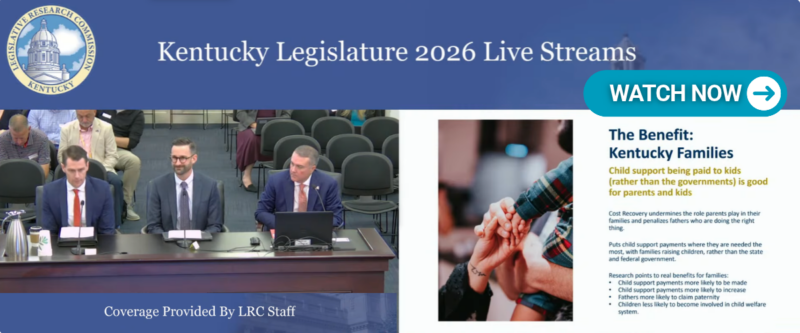
How does Kentucky’s current policy work?
When a family receives KTAP – the Kentucky Transitional Assistance Program, which provides temporary cash assistance to families with very low incomes – they are required to cooperate with Child Support Enforcement. Kentucky can intercept child support payments up to the amount of public assistance paid to the family, meaning some or even all of a payment may not go directly to the intended household.
Kentucky uses those payments for what is called “cost recovery.” Of these intercepted payments, the state keeps 28% of the payment and sends the remaining 72% to the federal government. In federal fiscal year 2025, nearly $15.7 million in child support payments were redirected through this process, impacting more than 14,000 Kentucky households.
What could Kentucky do instead?
Federal law gives states the option to pass through a portion of child support directly to families receiving cash assistance. Currently 31 states, D.C., and Puerto Rico use this option, allowing more of these dollars to reach families with very low incomes.
During the 2026 legislative session, Senator Craig Richardson proposed Senate Bill 337 to allow the first $100 per month in child support for one child, or $200 per month for families with two or more children, to go directly to the family. In the proposed legislation, those dollars would also not count as income when determining KTAP eligibility or benefit amounts, and any child support above the pass-through amount could still be subject to the current cost recovery policy.
One important point that came up during the recent committee discussion is that this proposal is focused on parents who are currently making their child support payments. It would not eliminate Kentucky’s ability to recover certain past-due child support, or arrears.
Why does this matter?
Allowing more child support to reach families could mean additional resources to help cover the everyday costs of raising children, while also strengthening the child support system. Research has found that child support pass-through policies can increase the likelihood that parents make child support payments and increase the amount paid. Pass-through policies have also been linked to a lower likelihood of children becoming involved in the child welfare system.
This issue also matters for kinship families, as some relative caregivers receive child-only KTAP on behalf of children in their care and must also comply with Child Support Enforcement. For caregivers who may already be living on fixed incomes and have stepped up to raise a relative’s child, having more of that child support reach the household can make a meaningful difference.
What’s Next?
Senator Richardson shared that he expects to refile the proposal during the 2027 legislative session. If this is an issue that matters to you, you can:



Leave A Comment